
From the Collection Robert Lincoln Through the Lens
From the Collection Robert Lincoln Through the Lens
by Jessie Cortesi, Senior Lincoln Librarian
The numerous photographs of Robert Todd Lincoln in the Lincoln Financial Foundation Collection together depict a young man finding his way in the world and growing into a mature patriarch at the height of his success. These twelve photos are a selection of Robert’s formal and informal portraits spanning sixty-four years, which provide a peek into major turning points of his life.
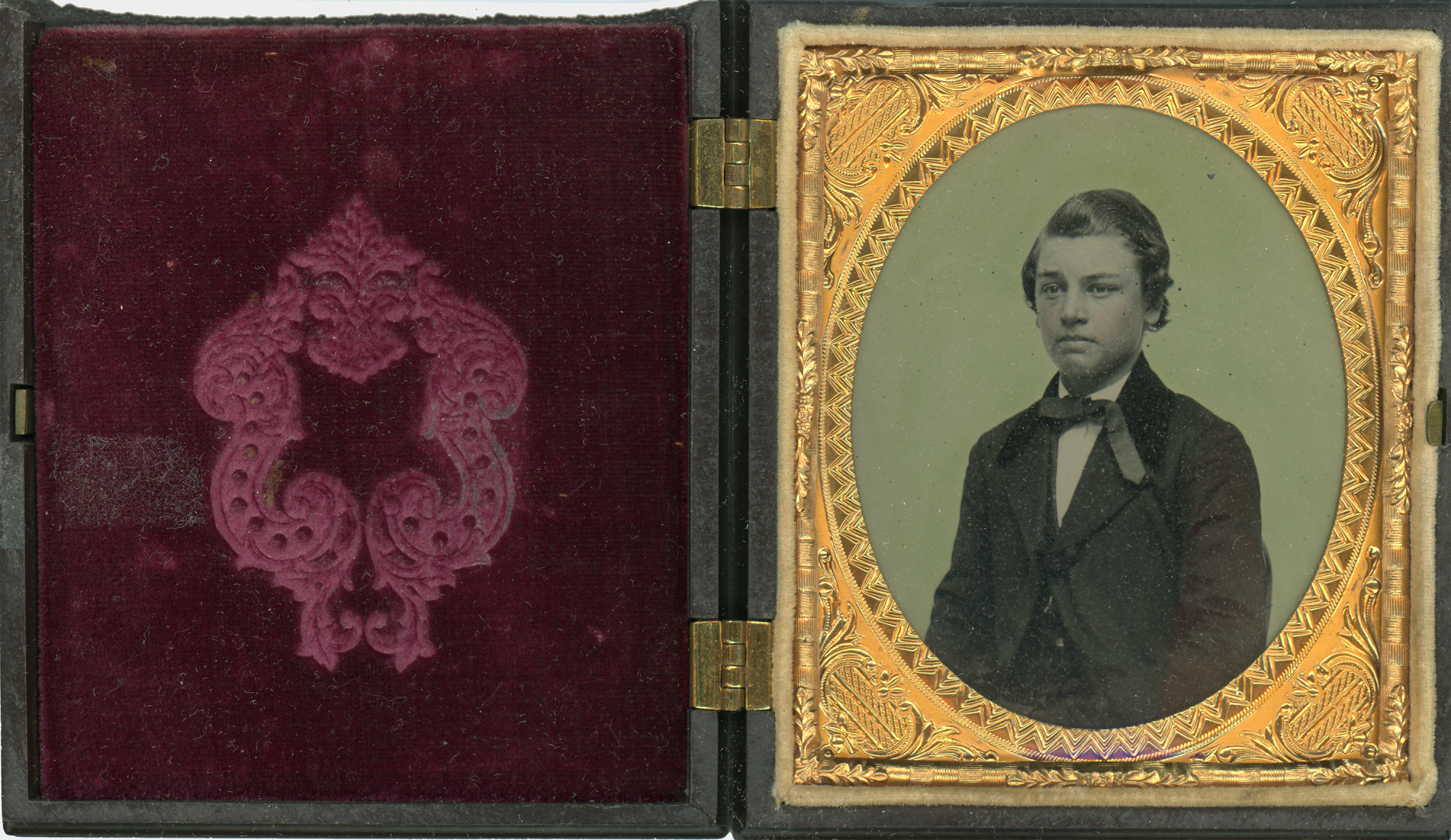
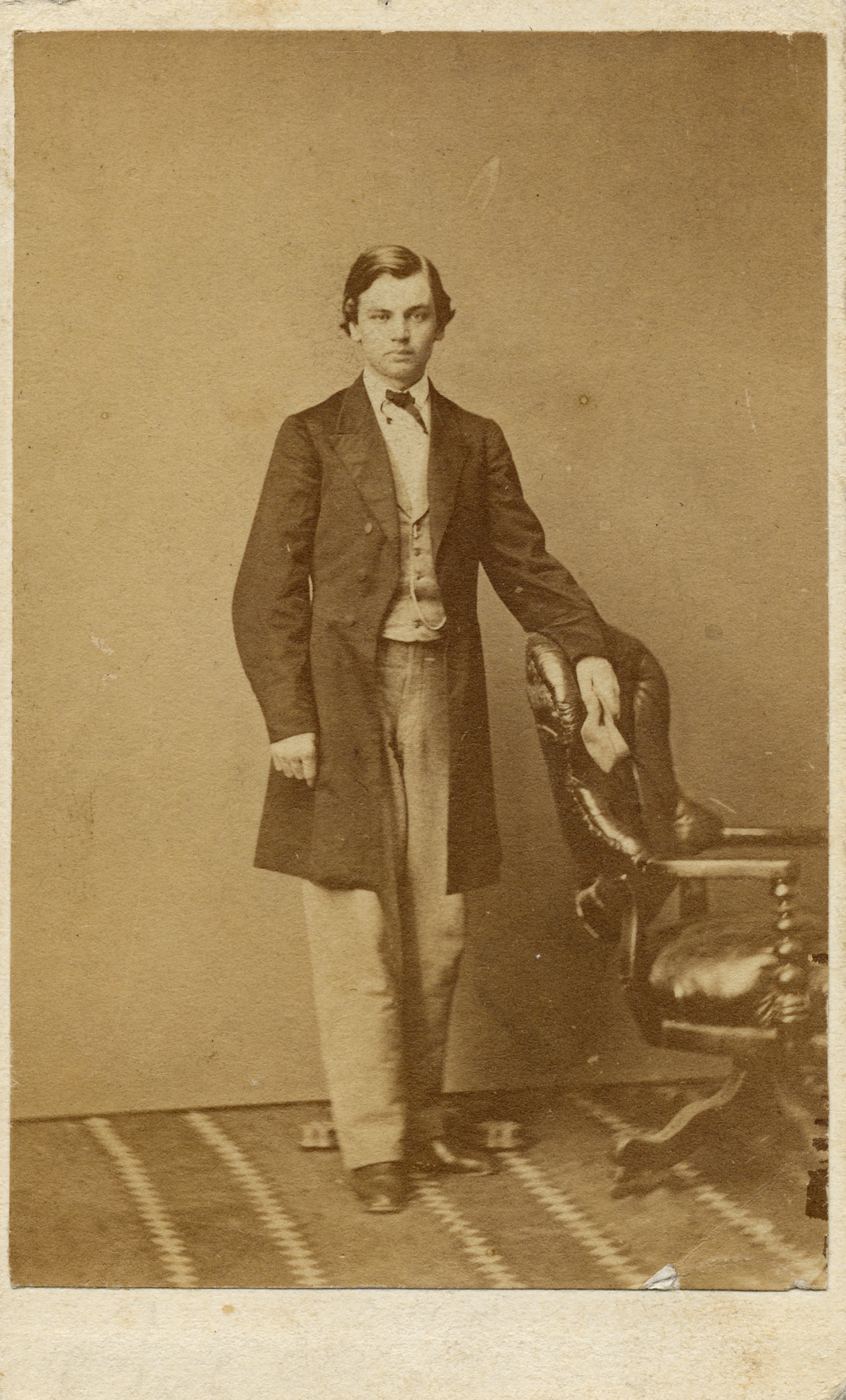
In 1858, the high-profile Lincoln-Douglas debates drew press coverage around the country, bringing Abraham Lincoln to the national stage after an uneventful term in Congress. With the media’s growing interest in Abraham, as well as his improving finances, sons Robert and Tad were photographed in Springfield in 1858. If Willie was also photographed at this time, there is not a matching cased photo of him from 1858 in the Lincoln Financial Foundation Collection. However, all three Lincoln boys were photographed in the subsequent year (the younger two in Springfield, Robert in New Hampshire), the cased ambrotypes all precious additions the family photo album. This photo of Robert shows a dapper young man of fifteen years in the last months before he’d fail the Harvard entrance exam and set off for New England to attend Phillips Exeter Academy in preparation for his college studies.
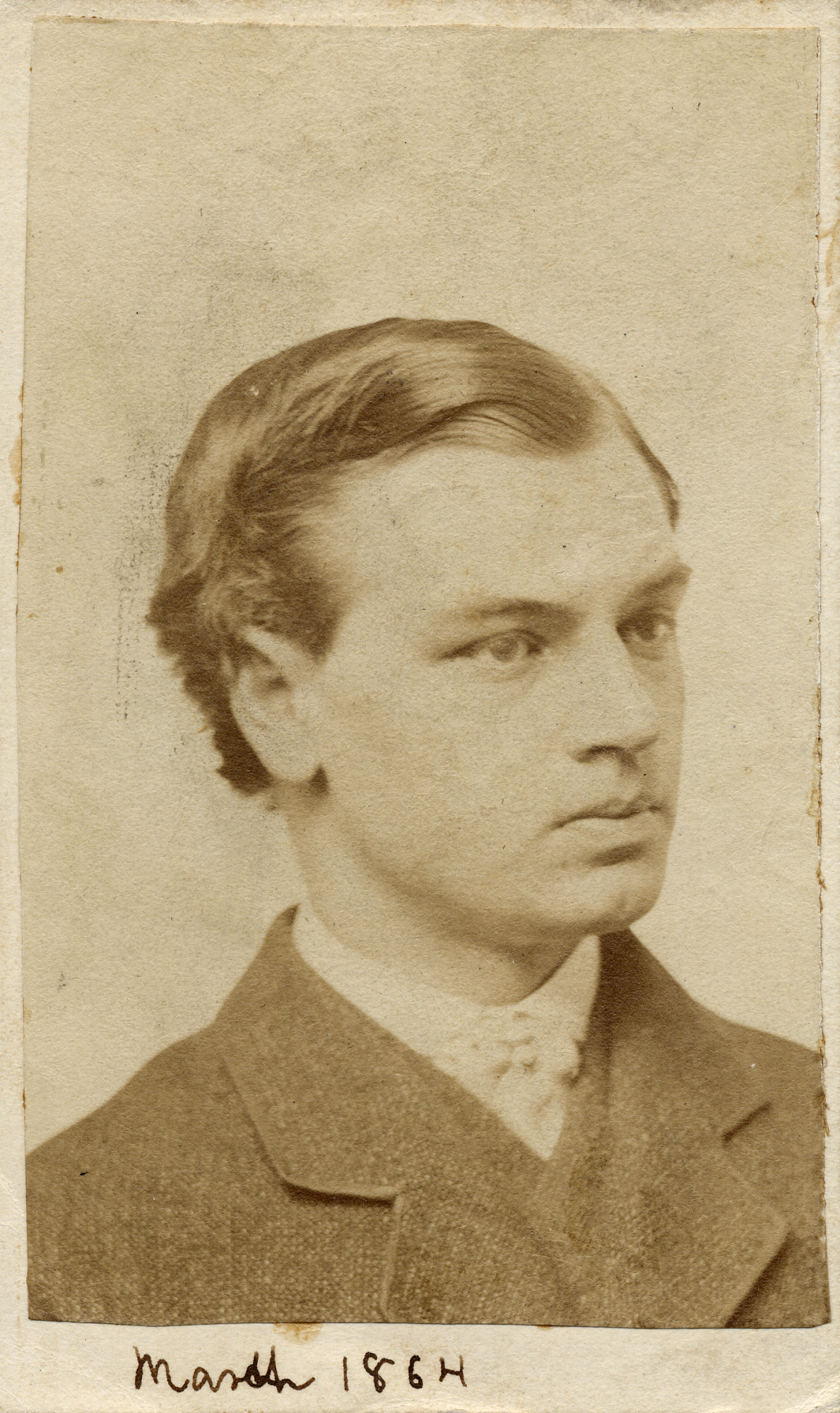
Having completed studies at the academy, Robert was at last admitted to Harvard in 1860. His attendance at university kept him from his family at the White House for long periods; he would, however, make trips from Cambridge to Washington to visit whenever he had a break. Mary wrote that she cherished Robert’s company in this season of their lives and relied on him as a male escort in her travels to New York City, Boston, Philadelphia, and the seaside town of Long Branch, New Jersey, to name a few. From lavish shopping excursions to social entertainments and simply escaping the bustle of the nation’s capital, mother and son were close companions during the war years despite the demands of Robert’s studies.
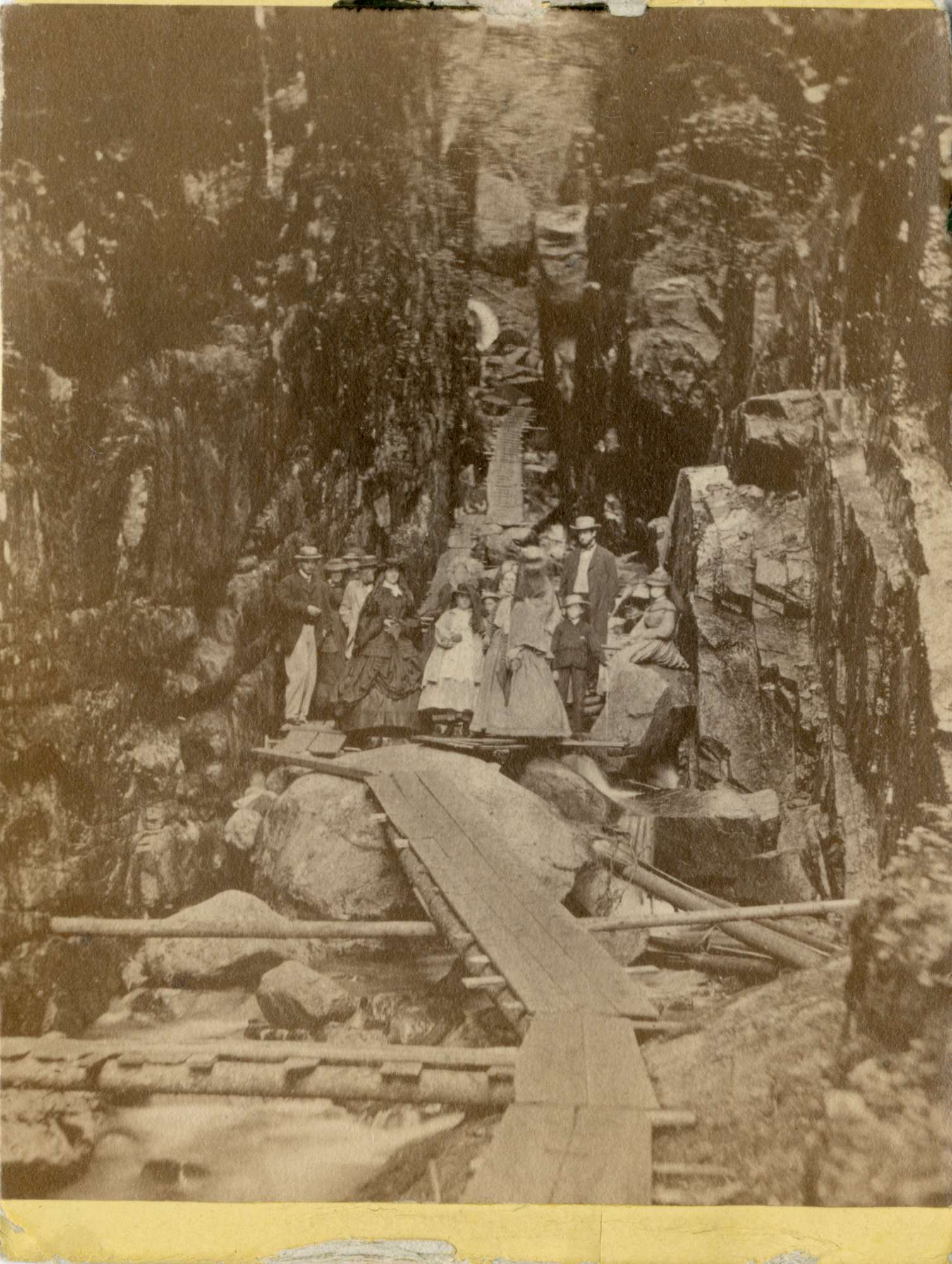
Taken in August 1863 during one of Mary Lincoln’s trips outside of Washington, D.C., this trimmed mounted photograph shows a touring group, including Robert (far left), Tad (center), and Mary Lincoln, at “the Flume” in Franconia Notch, New Hampshire.
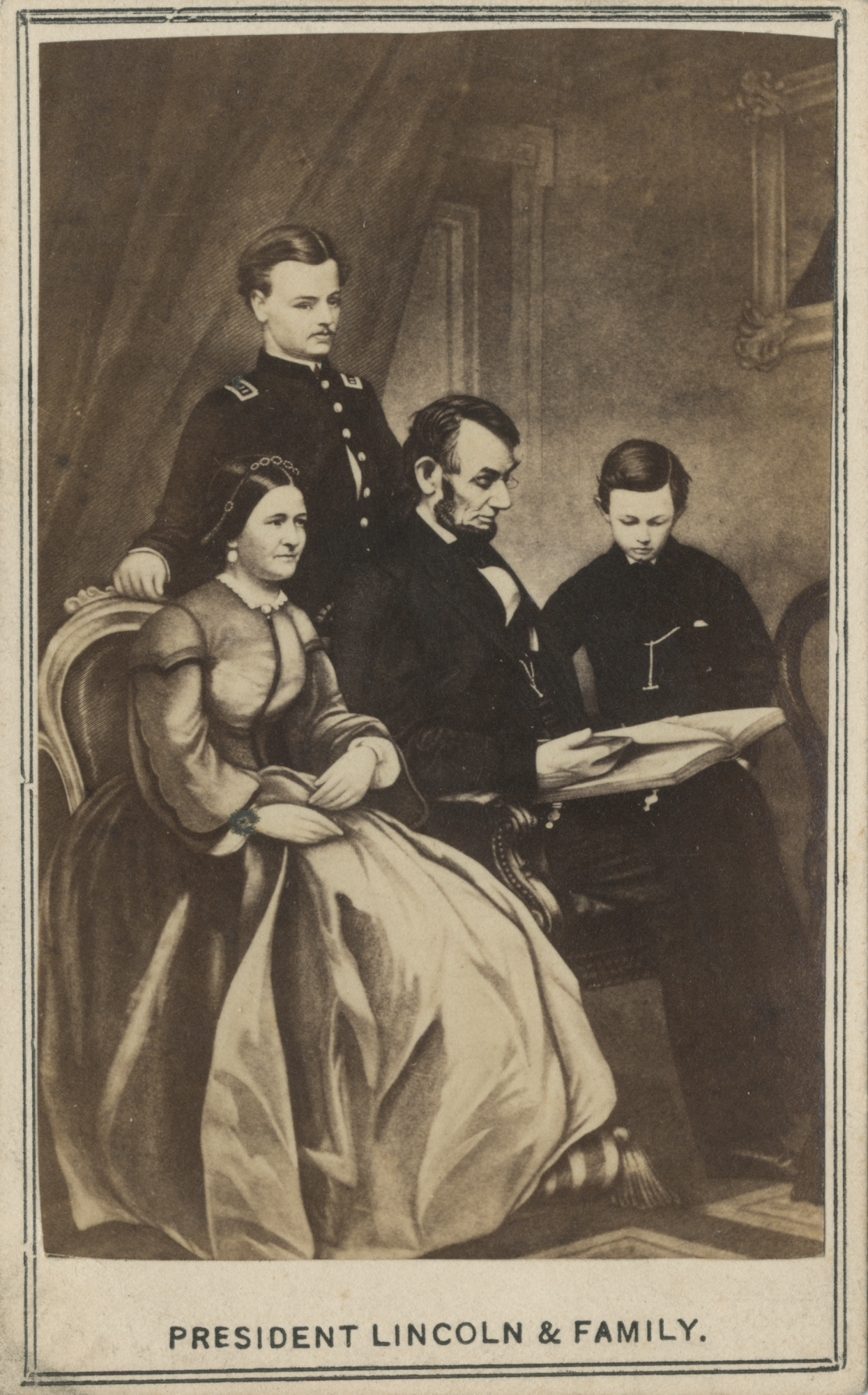
Robert was occupied with his education for most of the war, but he’d long sought to join the military and the effort to save the Union. His wish would not come to fruition until the dawn of 1865 when his mother finally relented and Robert was given a position on General Grant’s staff close to the action. He witnessed General Lee’s surrender, but the joy of the coming end of the war would not last long, and soon Robert was sitting at his father’s bedside through the long night of April 14th. Following Abraham’s death, the northern public clamored for photographs of the family together, but they had never sat for one. In this composite image, the artist took a photo of an unknown soldier, cropped the man’s head out, and pasted Robert’s on top as he’d never been photographed in uniform, having only served in the last four months of the war.
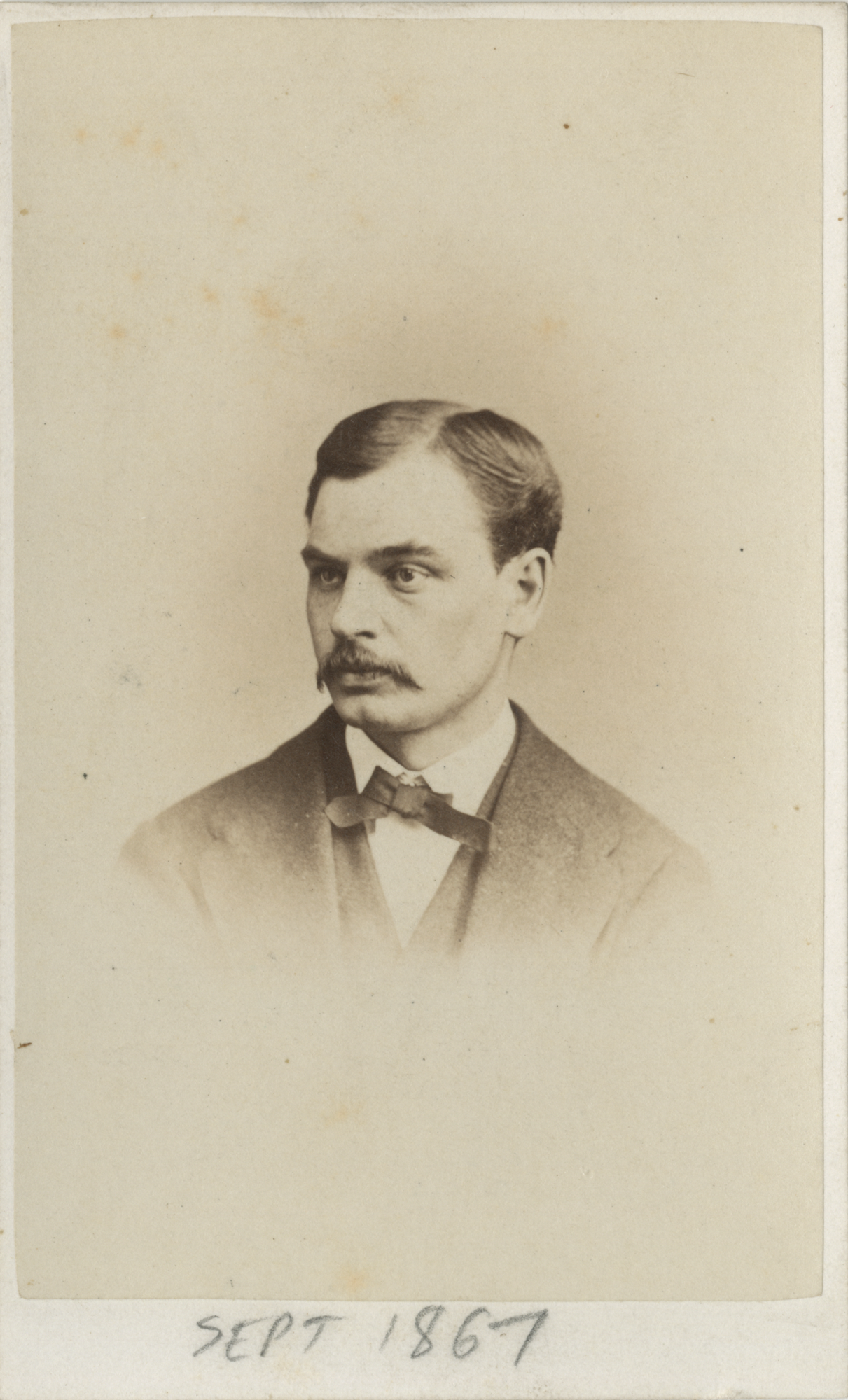
When Robert was photographed in September of 1867, life had drastically changed for him since his 1858 portrait. After his father’s murder, Robert, now twenty-four years old, was then juggling being the head of the Lincoln family, caring for his grieving mother, establishing a burgeoning law career, and courting Mary Harlan. Robert first met Mary, a senator’s daughter, in 1864, and the match was enthusiastically approved of by both of Robert’s parents. The young couple’s marriage was postponed by Abraham’s assassination, but the two would finally say their wedding vows one year to the month after this photograph was snapped. He’s pictured with that same perfectly coifed hair he’d sported nine years prior and had begun sporting facial hair he’d keep for the rest of his life.
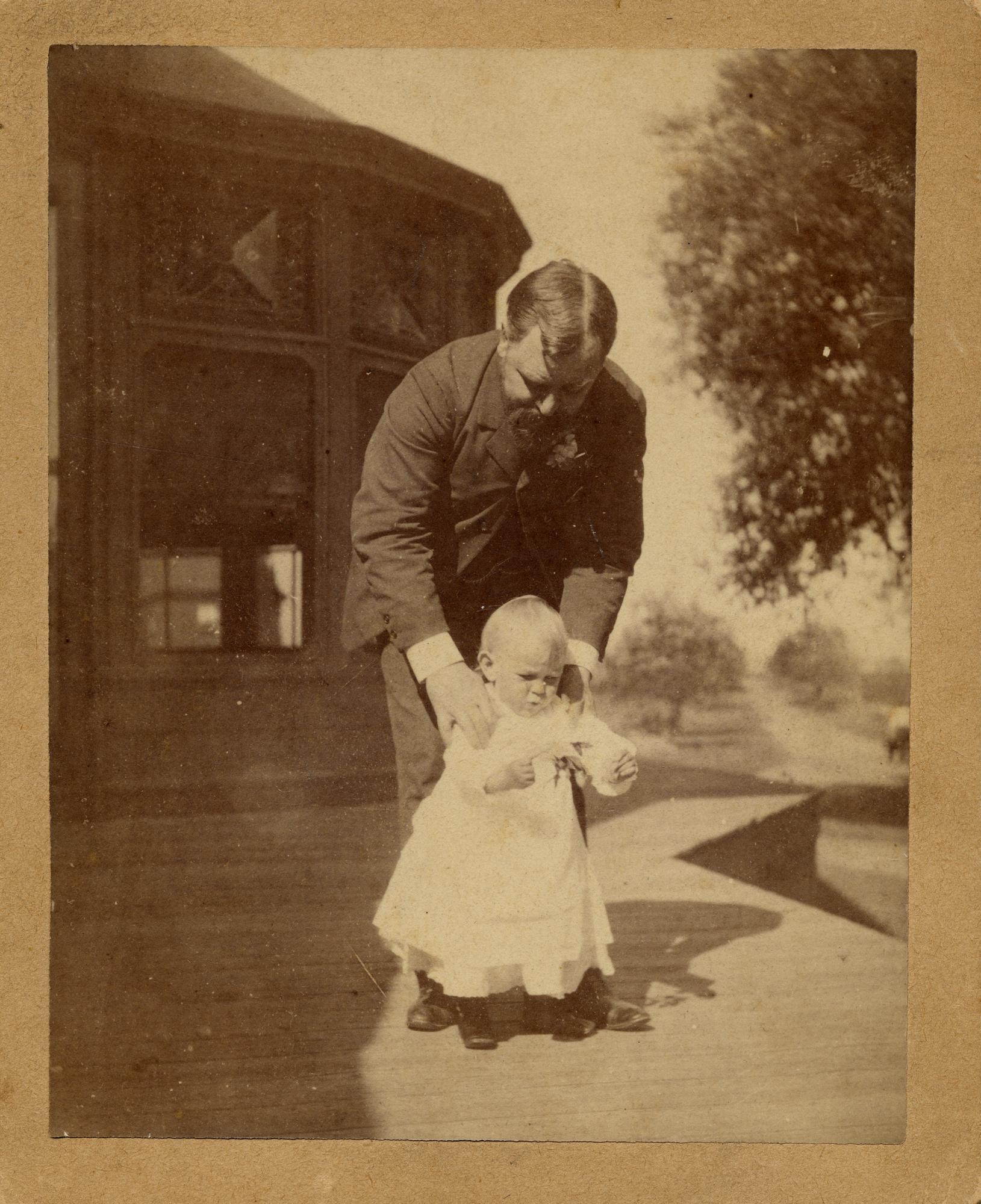
The 1870s were a busy time in Robert’s life. Like his parents, Robert was a family man. His first child, Mamie, was born in 1869, and he and Mary sent a baby photo to Mamie’s proud grandmother. Next to come along was Abraham II, known as Jack, born in 1873. Seen here as a toddler with his proud father, aged thirty-one, Robert appears to be helping Jack stand or walk. The youngest Lincoln of this generation was Jessie, born in 1875, the year following this snapshot. During these years, Robert’s own family of origin saw dark times. His only surviving brother, Tad, died in 1871, and his mother’s health was in decline.
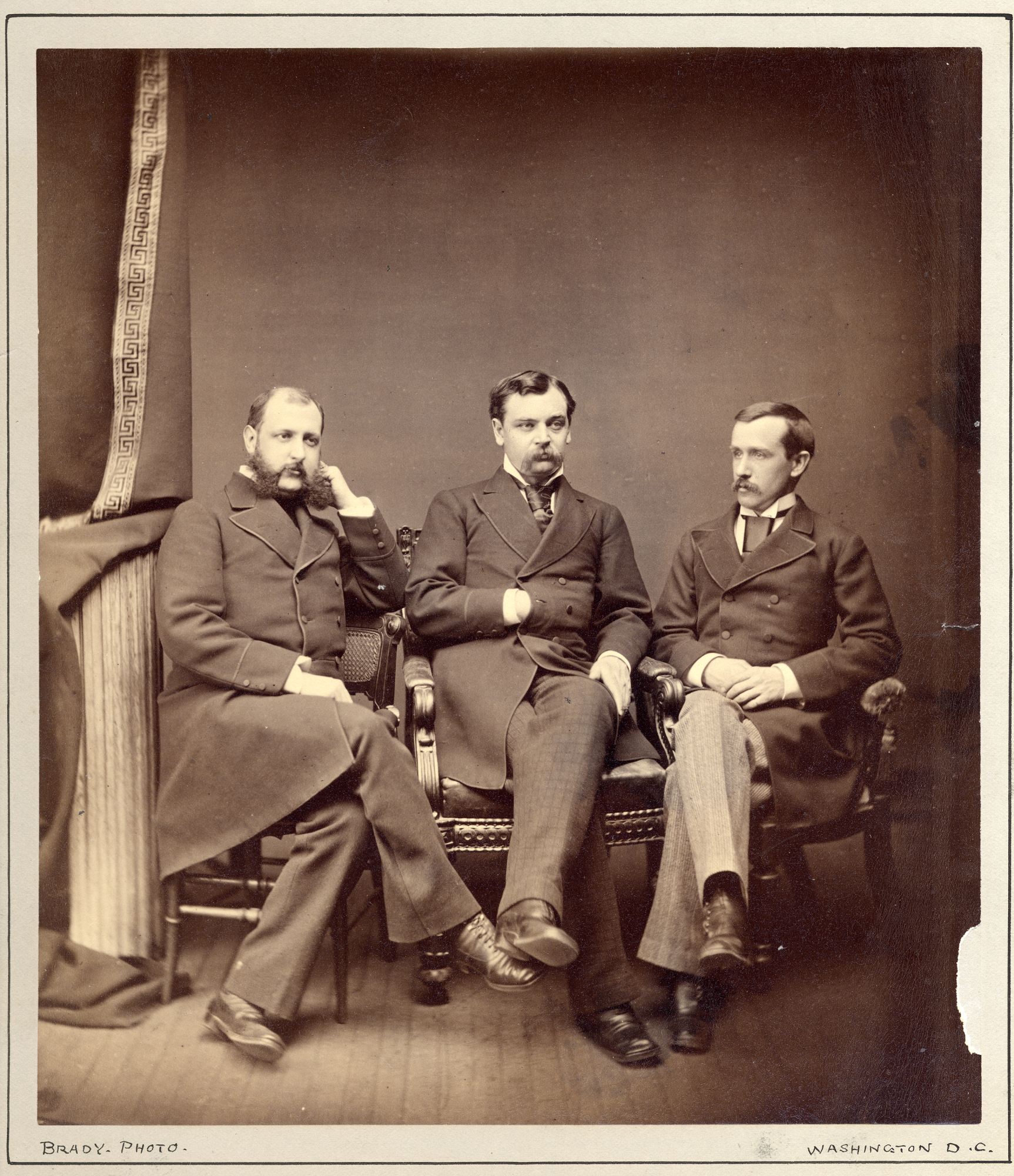
With her deteriorating sense of mind, in 1875 Robert believed it necessary to have his mother committed to an asylum against her will, which naturally put great strain on their relationship. Yet still Robert remained active in his Chicago community and in his career. In 1877 President Rutherford B. Hayes sought him out for appointment as assistant secretary of state, a position Robert declined. He kept up with connections in Washington despite his refusal, and in that same year sat for a photo with old friends Edgar T. Welles and Edwin L. Stanton (sons of two of Abraham Lincoln’s Cabinet secretaries) in Mathew Brady’s studio. Although seated, he strikes a Napoleon hand-in-jacket pose.
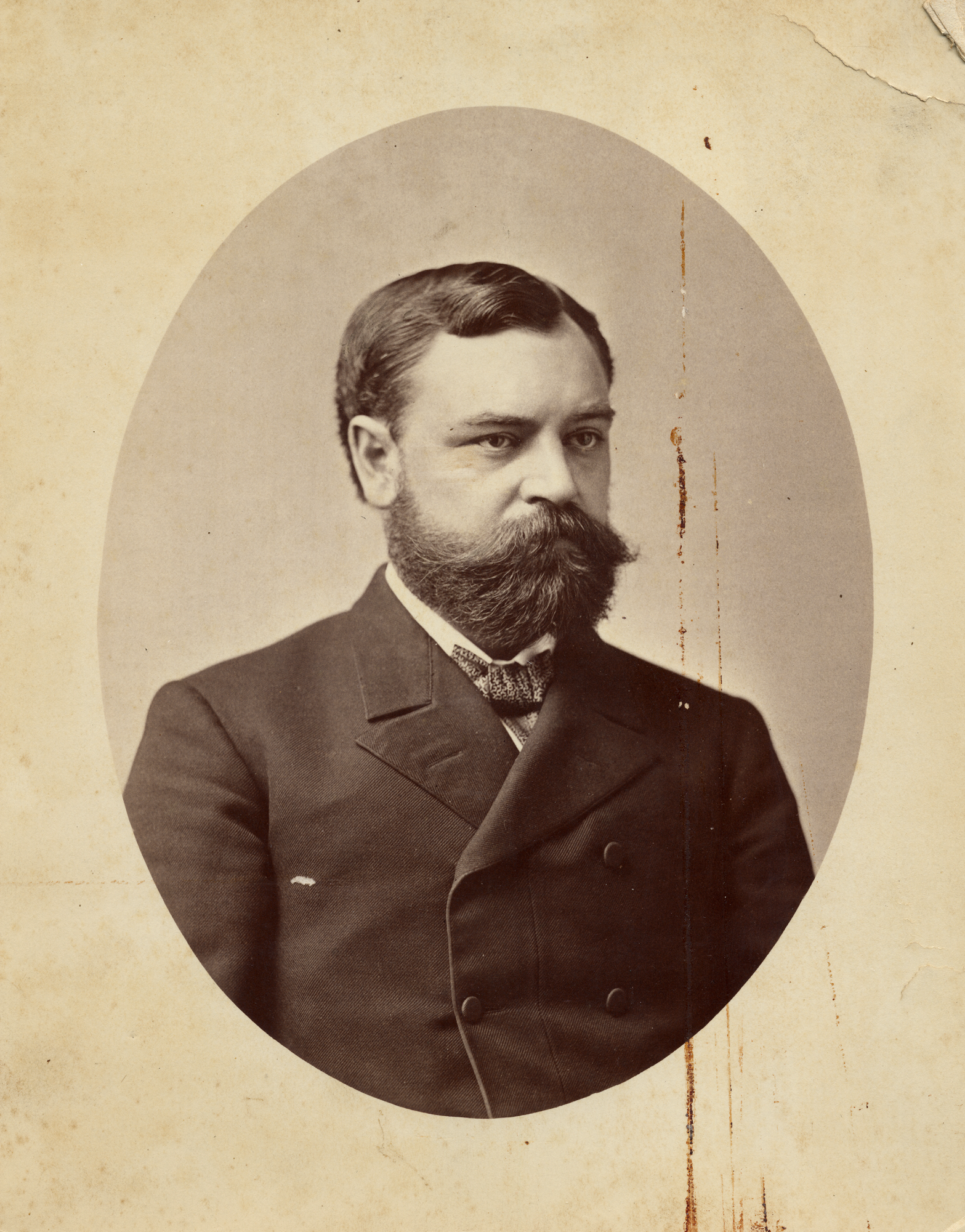
At thirty-seven in 1880, the mustache Robert had in 1867 had by this time grown into an impressive full beard, with his mustache fashionably curled up at the ends. The year after this photo was taken, Robert accepted appointment as secretary of war under President James A. Garfield. Shortly after his appointment, Robert witnessed Garfield get shot at a train station in the capital, and Garfield died a few months later. As a result, Robert served out the remainder of his appointment under President Chester A. Arthur.
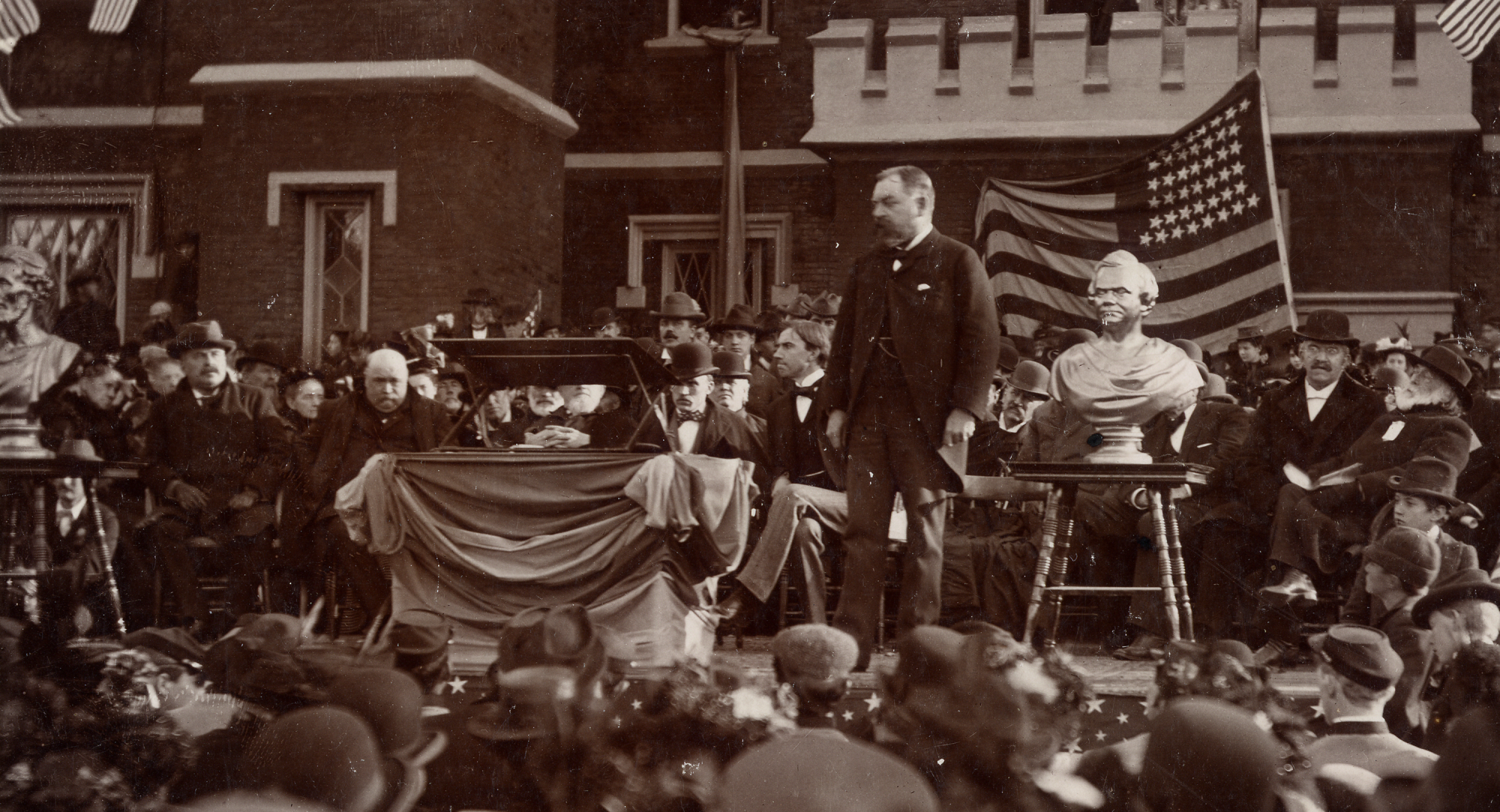
The final two decades of the nineteenth century were difficult for Robert. He grieved the loss of his mother in 1882 and teenaged son, Jack, in 1890. Professionally, he reached the heights of a successful law career, serving as Minister to the Court of Saint James in London (1889-1893) and as general counsel for the Pullman Palace Car Company during a trying time for the company—the 1894 Pullman Strike, the fallout of which would forever change U.S. labor law. (He would assume the presidency of Pullman in 1897.) In this 1896 photograph, Robert, now fifty-three, speaks before the crowd in Galesburg, Illinois, at the 38th anniversary commemoration of the Lincoln-Douglas debates, flanked by busts of the two statesmen. For all the years of his life after April 15, 1865, Robert Lincoln was inseparable from his father’s memory in the eyes of the public.
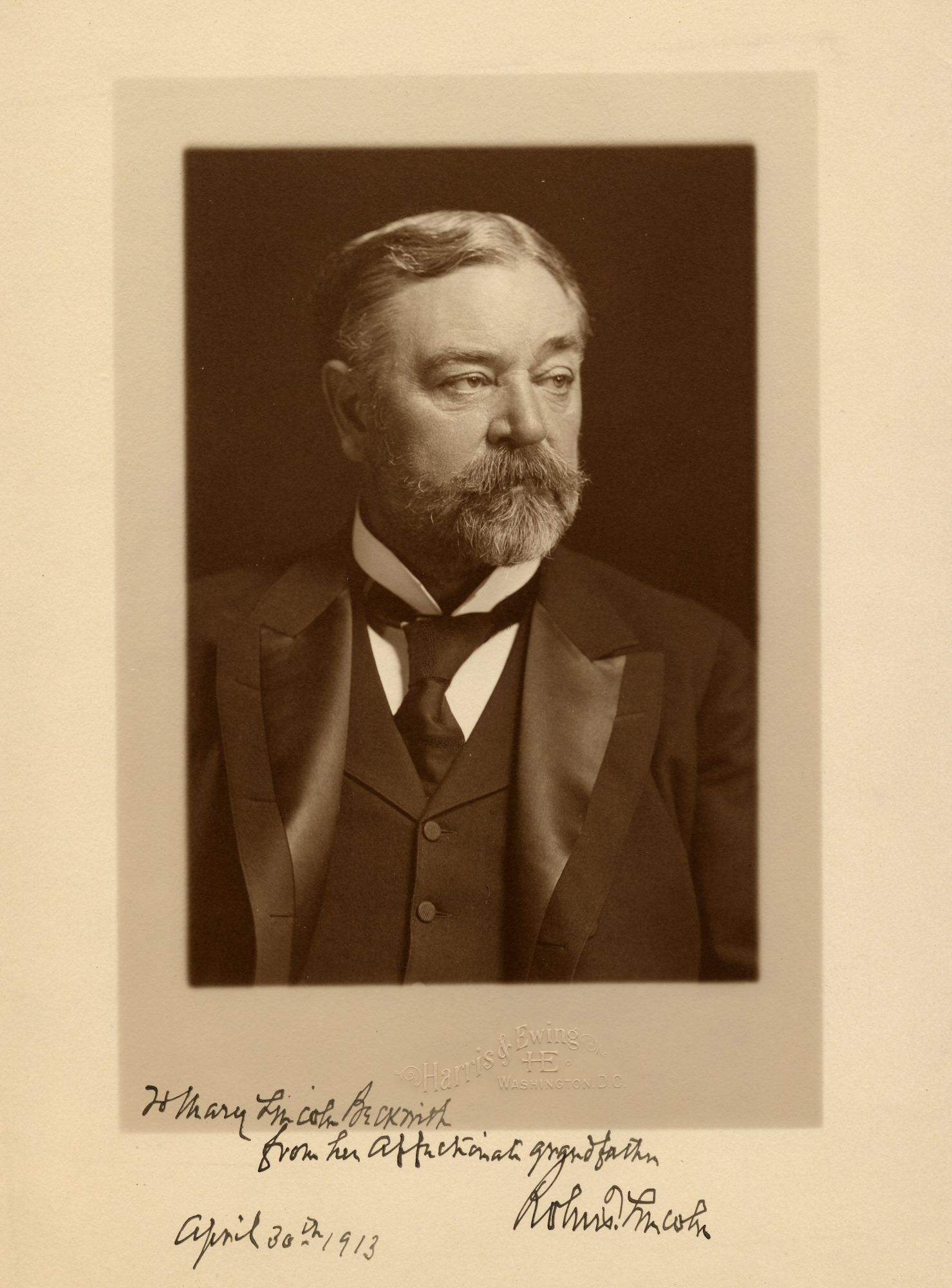
Grandchildren entered Robert’s life between 1892 and 1904. Of the three of them, Robert was by all accounts most fond of Mary Lincoln Beckwith, or “Peggy,” to whom Robert addressed this photograph in 1913, signed “her affectionate grandfather, Robert T. Lincoln.” At seventy years old, Robert had for nearly two decades been dodging calls for him to be considered for presidential nomination. He is seen here as a refined man of great renown, and he retains the dignified air he’d possessed since that 1858 ambrotype.
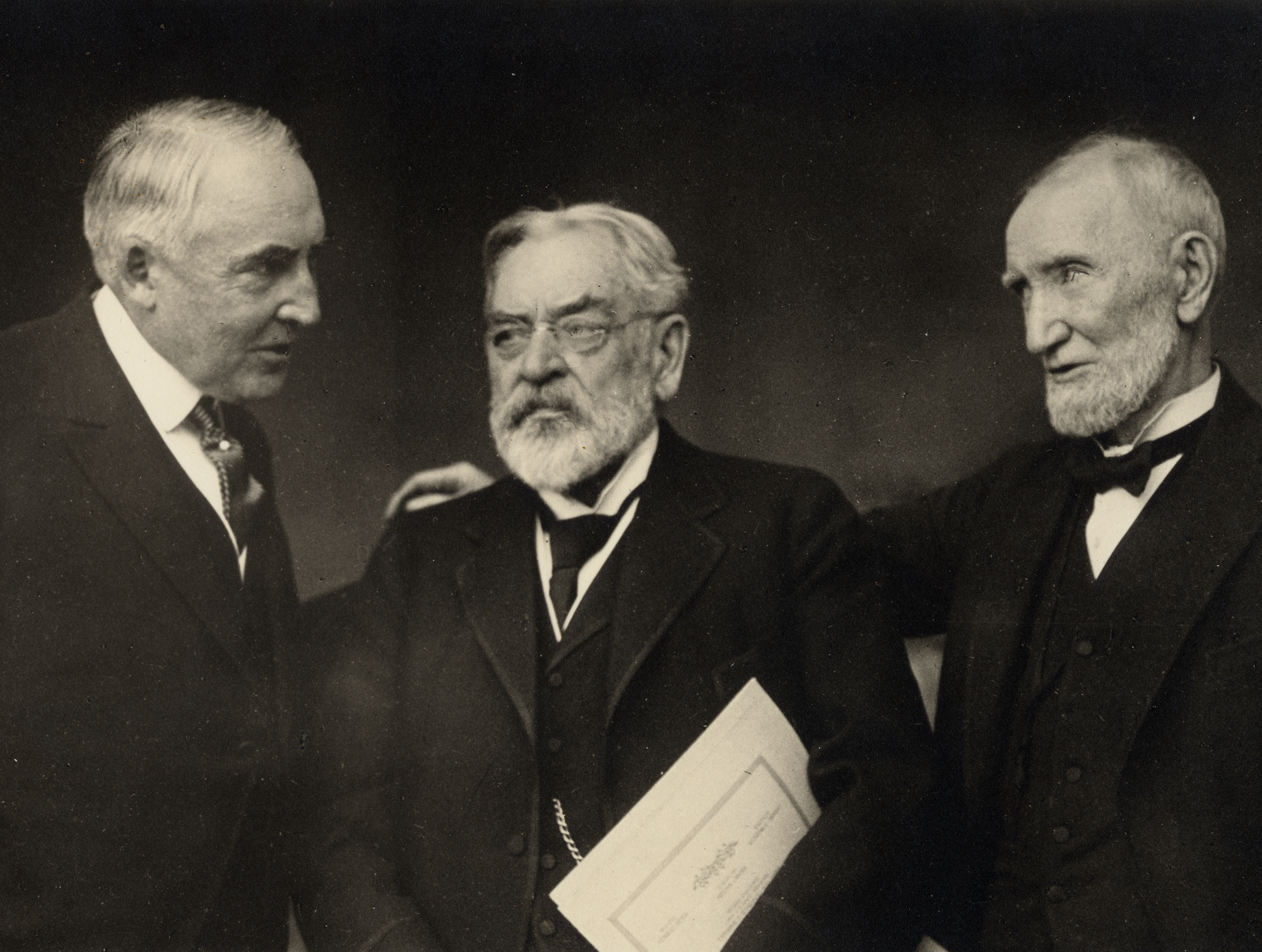
Aged seventy-eight, Robert’s final public appearance was at the dedication of the Lincoln Memorial in Washington, D.C., in 1922. He’d asked that no special notice be taken of him, but organizers directed him to a place of prominence for the event. In this photograph, he stands between President Warren G. Harding and former Speaker of the House Joseph Cannon. Four years later, Robert passed in his sleep and was buried at Arlington National Cemetery. But Robert would live and die in his father’s shadow. Often looked to carry the torch of his father’s memory, it’s light outshone Robert’s own achievements. When he died in 1926, Robert was identified simply as “Son of Lincoln” in the opening line of one obituary.