
An Interview with Jan Jacobi
An Interview with Jan Jacobi
by Jonathan White
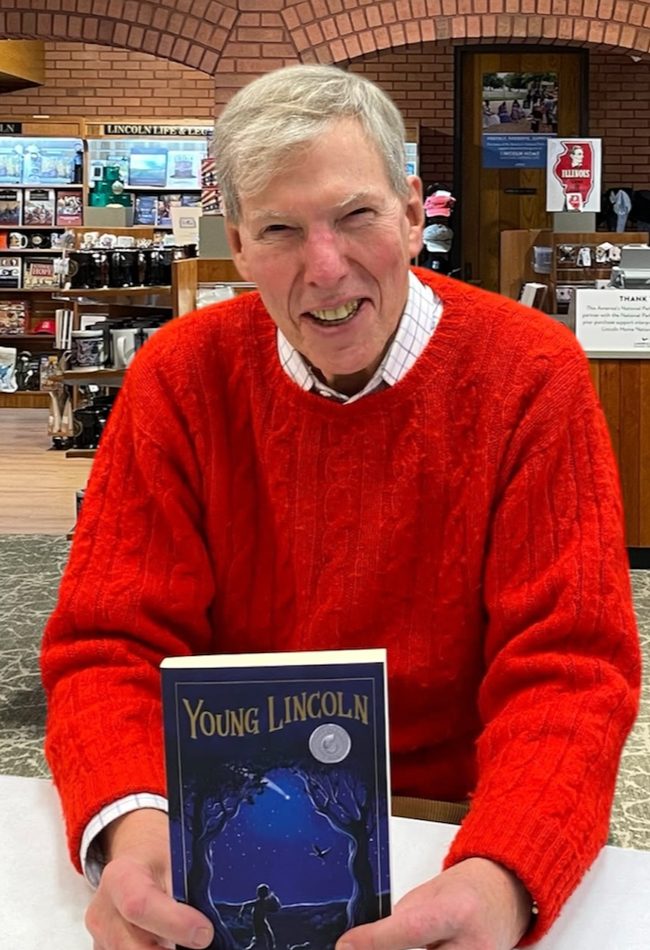
For fifty years, Jan Jacobi served as middle school head and taught English at three schools in St. Louis. He developed his interest in Abraham Lincoln by taking his students on field trips to Springfield, Illinois. His first two Lincoln books—Young Lincoln (2018) and Lincoln in Springfield (2021)—both won Nautilus and Best of Illinois History Awards. He recently published his third young adult book, Lincoln and Douglas (2025). His mission is to give young adult readers a human portrait of our nation’s greatest president.
Jonathan White: You spent most of your career educating kids. When and how did you decide you wanted to write books?
Jan Jacobi: When I attended a boarding school (Kent School in Connecticut) for five years, I learned how school could be a life-changing experience. I graduated with the goal of becoming a teacher and eventually a headmaster. I ended up a middle school English teacher and middle school head at three schools. In 1982, I moved from New York to St. Louis to take a position at St. Louis Country Day School. I joined the other seventh grade teachers in taking our students on field trips to the Lincoln sites in Springfield. I was hooked, and since then I’ve been reading extensively about Lincoln. When they learned there was no book about Lincoln for middle schoolers, my students said, “You should write one.” The result has been what will be a five-book series of young adult novels about Lincoln’s life for middle and high school students.
JW: Your first book took some time to get in print—and even involved one of your former students. Tell us about that experience.
JJ: So I wrote the young adult novel on Lincoln’s early years and sent it to agents I knew in New York. Rejected by all. I sent it to agents I didn’t know in New York. Rejected by all. My backup was a small publishing company in St. Louis that was run by one of my former students, a graduate of the Iowa Writers’ Workshop. I sent it to him. Two days later he rejected it—too many rabbit holes where kids would get lost. “If I take them out, will you look at it again?” I asked. He said yes. After resubmission, he called me and invited me to coffee. His first words were, “Jan, you’re a teacher, not a writer.” I came home and put it in the bureau drawer. Three months later he had lunch with my daughter, who is a writer, and who was working with him on a Missouri River project. They both agreed there was a story in it, but it was not getting out. They came to me and said, “You should change it to first person.” “Nonsense,” I said, “no one can write in the voice of Abraham Lincoln.”
JW: But that’s exactly what you’ve done. How do you strive to capture Lincoln’s voice?
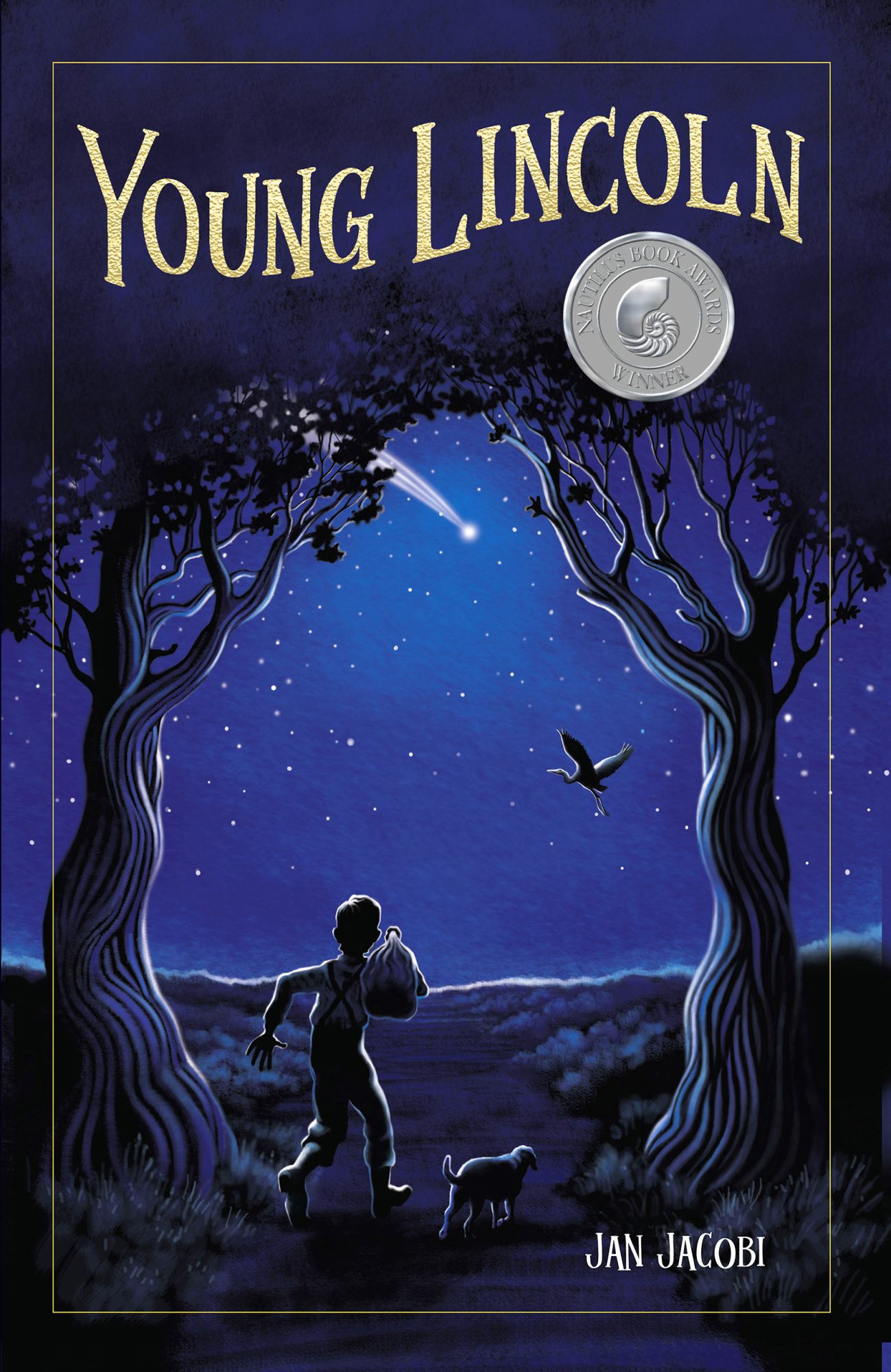
JJ: Perhaps burying myself in our local library uncluttered my mind, but the voice I’ve used in all three books came magically to me. Perhaps it’s because I’ve grown older or it’s the call from all I’ve read about Lincoln. I write in a voice in which Lincoln is thinking about himself and observing the world around him. He learns from his experiences. I do not try to imitate the Lincoln of the Collected Works, but there are places in the books, annotated of course, where Lincoln speaks his own words. I rarely use dialect, although Mark Twain was my model for the dialect in Young Lincoln. When my book club read Lincoln and Douglas, one of our friends commented, “He thinks like a trial lawyer.” If I achieved that, it really is magical.
And then, even though I had a manuscript, my publisher put me through another hoop—a young adult editor in Chicago. When it came back two months later, I had half a manuscript. At this point, I almost gave up. The project sat for two months. When I finally went back over the editor’s slicing and dicing, I realized she was right about 90% of it. Six months later we had a publishable manuscript. My editor and I have forged a relationship that has lasted through three books and seven years. She is my partner and without her my books would be tinkling cymbals.
JW: Tell us about the research you do for your books.
JJ: Because I am writing for young people, with an eye toward an adult audience, I am telling a story. That means I’m not doing original research. I am standing on the shoulders of the scholars who make my project possible. As a primary source, Herndon’s Informants has been my bible. I rely on the standard secondary sources, mostly biographies and histories, but when I find a tidbit, I’ll track it to the primary source. I always give attribution to the writer who was there before me. I read the newspapers, letters, diaries, and journals to give me a sense of the time period.
JW: What is it about Abraham Lincoln the appeals to young adults?
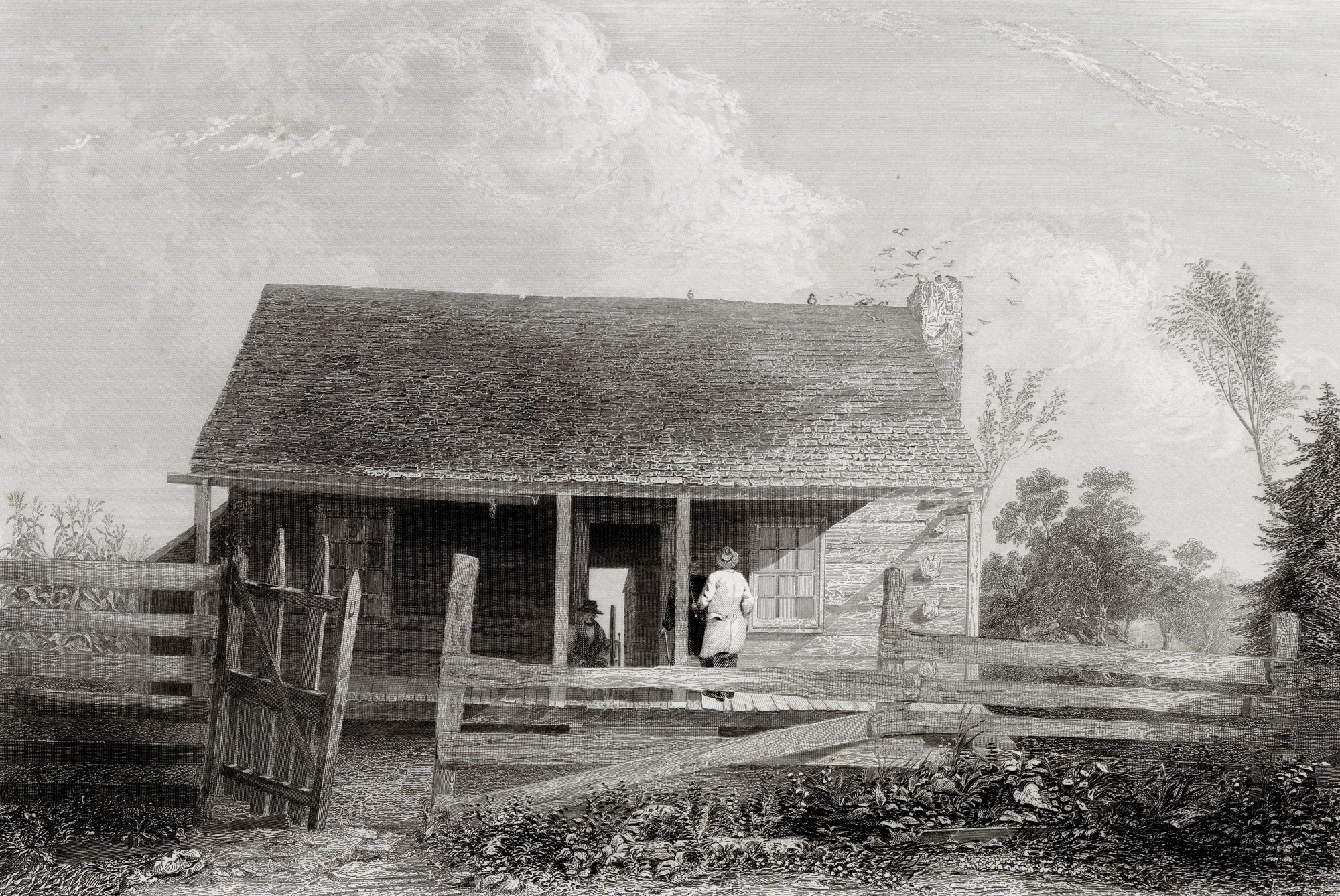
JJ: Everything about Lincoln appeals to young adult readers. They see themselves in his struggles and challenges. Lincoln’s early life is the definition of adolescent turmoil. He struggles with identity issues, self-doubts, depression, loss, and failure: issues that will continue on into adulthood. A recent study showed that many young people lack purpose in their lives. In Young Lincoln, Abe tells us, “The most I’d say for myself is that I became an instrument of purpose.”
It was a lifelong struggle, and he forged through it just in time to become president at the worst time imaginable. What a role model for all of us. It’s a great story.
JW: What do you see in Lincoln’s boyhood that foreshadows who he would become as an adult?
JJ: The fundamental thread here is that he learns to rely on himself. He will do this all his life, and as president it is essential. How does he become self-reliant? It’s in part because he spends so much time alone (sometimes with his dog), and in that aloneness, he develops his habits of mind. He becomes reflective and an astute observer of human beings and human nature. In Young Lincoln, he asks himself, “From what and from whom can I learn about the world?” How do we know this? It’s from all the voices in Herndon’s Informants—from Sarah Bush Lincoln to Anna Roby Gentry to Dennis Hanks and many others. As a boy he learns to live with his sadness which mysteriously appears from nowhere. Most likely it’s from loss, and it will become garden variety depression in his adult years. He loves being with friends; he entertains them by mocking the preacher and telling them stories. This will emerge full blown in the adult Lincoln. The humor and the frontier stories will keep him going during the times of unimaginable stress. He has a tender and empathetic side as a boy, and he loves animals. He returns birds to their nests, and he stops his friends from burning turtles. As president he will rescue three kittens and bring them to the White House.
JW: What surprised you most in your reading and writing about Lincoln as a boy and a young man?
JJ: I was surprised and dismayed that Thomas Lincoln left Abe and Sarah virtually to fend for themselves when he left them to search for a new wife in Kentucky. Thomas was gone for several months and Abe and Sarah, under the erstwhile care of Sophie Hanks, suffered from physical and emotional neglect. When Thomas arrived with his new wife, Abe and Sarah were dirty, emaciated, and dressed in rags. Of all the struggles that Lincoln underwent, it was one of the worst. Michael Burlingame speculates that Thomas’ lack of care for Abe after the death of his mother may have deepened his depression.
JW: How do other characters, like Joshua Speed and Mary Todd, come across in your books?
JJ: That’s the fun of writing fiction about Lincoln—although as you and I have talked—fiction that hews closely to the historical record. The fun comes in bringing to life the people in his life. Joshua Speed is an endearing character in Lincoln in Springfield, and he is also the human being to whom Lincoln was the closest in his life. There is an intensity to the relationship between two young men who are poised on the brink of adulthood. My editor liked the scenes around the fireplace in Speed’s store where John J. Hardin, Stephen Douglas, Lincoln and Edward D. Baker, the rising young men of Springfield, gathered with Speed in the evening to talk about politics, poetry, and local gossip. She called them the “fireside chats” and wanted me to include more of them. I thought she’d surely cut the scene where Speed casts his friends as the mechanicals in A Midsummer Night’s Dream, but she loved it.
The relationship between Lincoln and Speed is the heart of Lincoln in Springfield. Speed is very empathetic. When Lincoln breaks off his engagement to Mary Todd and experiences serious depression, Speed nurses him through it. Lincoln is a marriage counselor for Speed when he has cold feet about marrying Fanny Henning, and Speed returns the favor when Lincoln is wary of committing himself to marriage with Mary Todd. Although we don’t have Speed’s letters to Lincoln, Lincoln’s letters to Speed give me the chance to use his own words to deepen his character. At the end of Lincoln in Springfield, Lincoln tells us, “It was the last burst of youth that brought us together.” Sadly, in adulthood, the friendship will fade. Distance keeps them apart, and it is hard for them to overcome their differences on slavery.
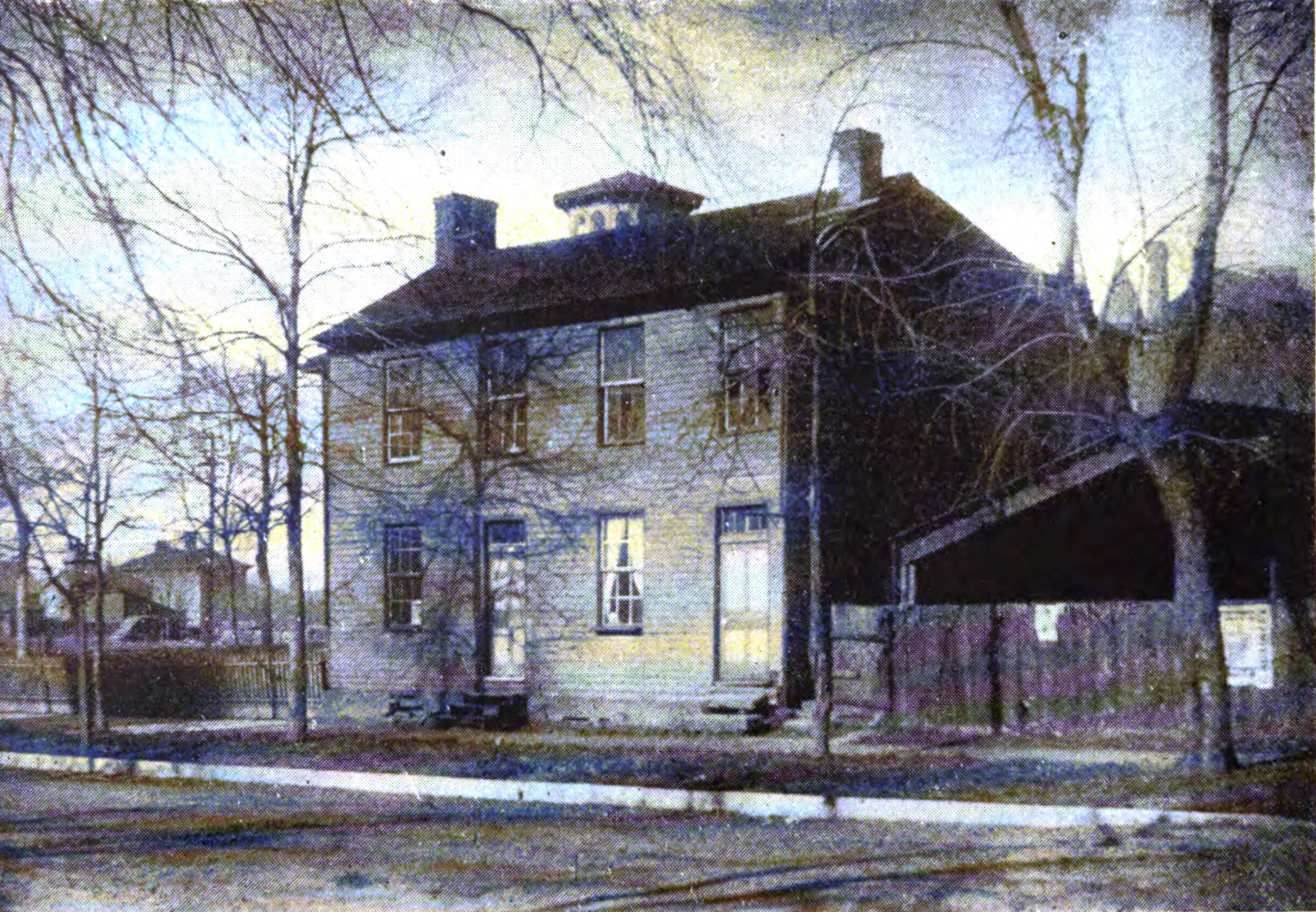
When I started to write Lincoln in Springfield, a friend asked me, “Will you actually have Abe and Mary talking to each other?” Of course I do! Dialogue is a key element in establishing character. What do they say to each other? Well, the same kinds of things that any married couple say to each other, but, as we well know, each marriage is different, and no married person can really know the true dynamic of anyone else’s marriage. With that as a caveat, I decided to go down a middle path in portraying the marriage. It had good moments and bad moments. They were fond of each other, but neither gave the other what the other truly needed. Mary needed affection and reassurance, and Abe needed a softer, kinder, Ann Rutledge-like presence in his life. He had deep emotional wounds. When I visit the Lincoln Home in Springfield, I always ask the ranger for his or her take on the marriage. One said, “Without Mary Todd, he doesn’t make it to the White House.” I agree. She kicked him into motion several times in the 1850s when he was at low ebb. Another ranger commented, “I wouldn’t have wanted to be married to either of them.” That’s probably the best commentary I’ve heard on the marriage.
JW: William Shakespeare’s Macbeth is central to Lincoln in Springfield, and Hamlet is an important thread in Lincoln and Douglas. Tell us about that.
JJ: I always challenged my students with classic literature in my classroom. I found they could enjoy it, and they were surprised to see that the issues in their lives were the same ones faced by Telemachus, Hamlet, Robinson Crusoe, and Huck Finn. My books have allusions to classical poetry, drama, and nineteenth-century novels. It’s a way to keep this literature alive.
Lincoln loved Shakespeare. He read it constantly, and he performed soliloquies for anyone who would listen—often for John Hay and John Nicolay in the middle of the night. It wasn’t a stretch for me to include it in my Lincoln books. In Young Lincoln, Jack Kelso recites Shakespeare and Burns when he fishes in the Sangamon River. Abe is sitting next to him on the riverbank absorbing it all. Abe asks Jack about Shakespeare’s tragic heroes, “Why are they so noble, so misguided, and so miserable at the end?” Jack replies, “Probably because they’re exactly like us.”
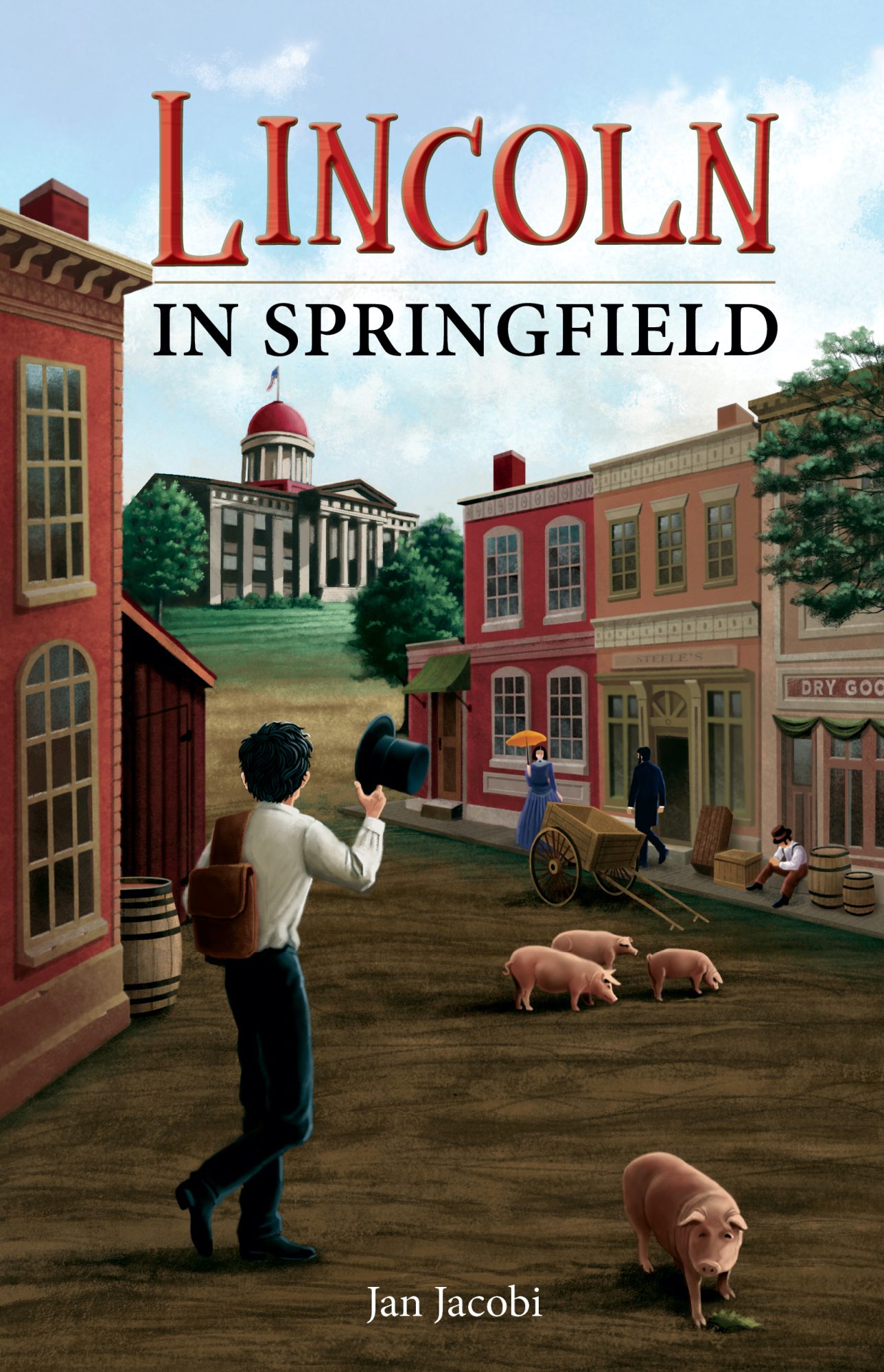
In Lincoln and Springfield, Abe and Joshua Speed attend a production of Macbeth. As Macbeth’s ambition gets the better of him, Lincoln is haunted by his own “vaulting ambition.” Speed says Abe’s ambition is balanced compared to Douglas’s, but Abe is not so sure. Abe asks his friend, “What if my ambition knows no rest?” Speed tells him, “No one can answer that but you.” Abe replies, “Speed, I am afraid it is very dark.” Speed then asks him, “Are you asking if you can have deep ambition and still remain good?” When Abe says, “Yes,” Speed replies, “Then you must wrestle with it.” Abe finishes, “I do each day.”
The thread from Hamlet goes deeper in Lincoln and Douglas. David Davis and Lincoln go to a traveling production of Hamlet in Bloomington to take time off from the political wars. After the play they discuss it in Davis’s study. Davis sees Hamlet as a ditherer, but Abe does not agree. For Lincoln, the play is Hamlet’s struggle to face his impending death, the martyrdom he will have to accept to cleanse Denmark of its rottenness. Only Hamlet’s blood can wash the kingdom clean. It foreshadows what Abe will have to face in his presidency.
JW: Lincoln and Stephen Douglas had a twenty-five-year relationship in Illinois politics. What aspects of that story did you find the most compelling when writing Lincoln and Douglas?
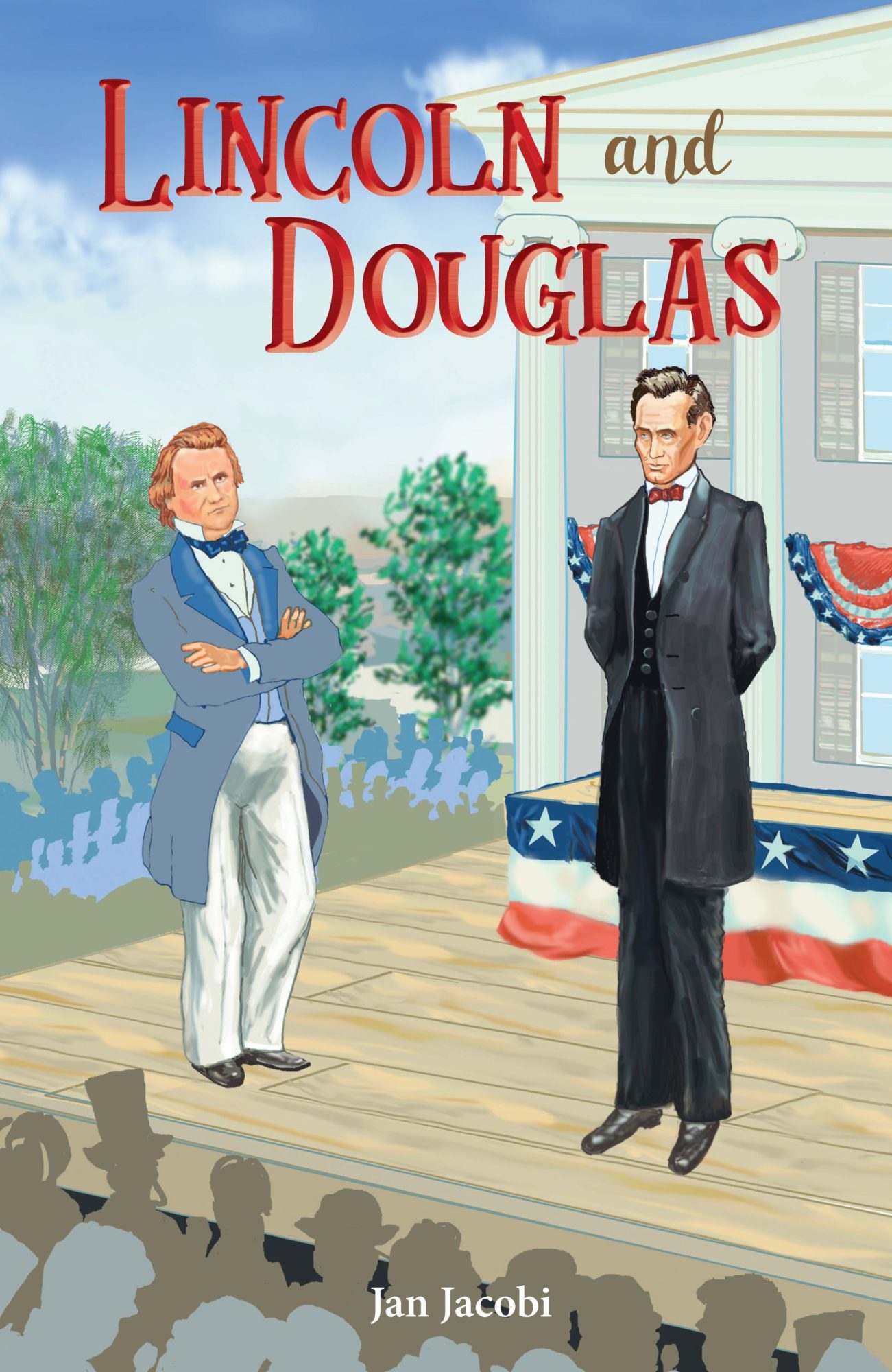
JJ: When they hear the name Stephen Douglas, most people think of the Lincoln-Douglas debates and that’s it. They don’t realize that Lincoln and Douglas had a long relationship which began when they met in the Illinois legislature in 1834. They were friends, political rivals, rivals for the hand of Mary Todd, eventually bitter enemies in the late 1850s, and finally friends again, in 1861, united in the cause of saving the Union. Their rivalry is really Aesop’s story of the tortoise and the hare. Douglas was the hare who streaked to the top of American politics in the late 1840s and the 1850s while Lincoln was the plodding tortoise left behind in the dust. Eventually the hare (and Stephen Douglas) self-destructed (Kansas-Nebraska Act), and the tortoise, having developed character through his struggles, won the race.
Lincoln and Douglas are two very different people. It was fun to write the conversations they must have had. They parry with each other throughout the book. The moment that I find most poignant in their relationship is the reconciliation after the war begins. It’s the epilogue of the book. Douglas tells Lincoln he is the human being who understands him the best. After their conversation, Lincoln says, “Douglas is a noble man.”
JW: When writing for younger readers, how do you deal with difficult concepts, like racism and slavery? I’m thinking not only of Douglas’s blatant and vicious racism, but his “don’t care” attitude toward slavery.
JJ: I wanted to like Douglas. He was charismatic and charming. He was a brilliant legislative politician, the equal of Henry Clay. However, there is a serious problem. As you point out, Douglas was a blatant and vicious racist. Frederick Douglass said no one was more responsible for “hatred of the negro” than Stephen Douglas. It’s an interesting factoid that Douglas dropped the second “s” in his name around the time that Frederick Douglass published his first autobiography in 1845.
I can’t answer this question without a little background. For my entire professional career, I taught English to seventh and eighth graders. They were in their early teens. Schools underestimate the cognitive capabilities of these children, and they also underappreciate the deeper emotional levels on which they function. I always aimed for the 75th percentile in my classes. One student commented, “Mr. Jacobi’s class is really a philosophy class.” Now with students able to operate on that level, you can confront some of life’s ugliness. It’s an important lesson. We confronted slavery and racism. We read Huck Finn. It’s an antislavery text. We watched 12 Years a Slave. (We also read Night by Elie Wiesel and The Diary of Anne Frank.) If I can puff out my feathers slightly, I was honored to be the Gilder Lehrman Institute teacher of the year for Missouri several years ago.
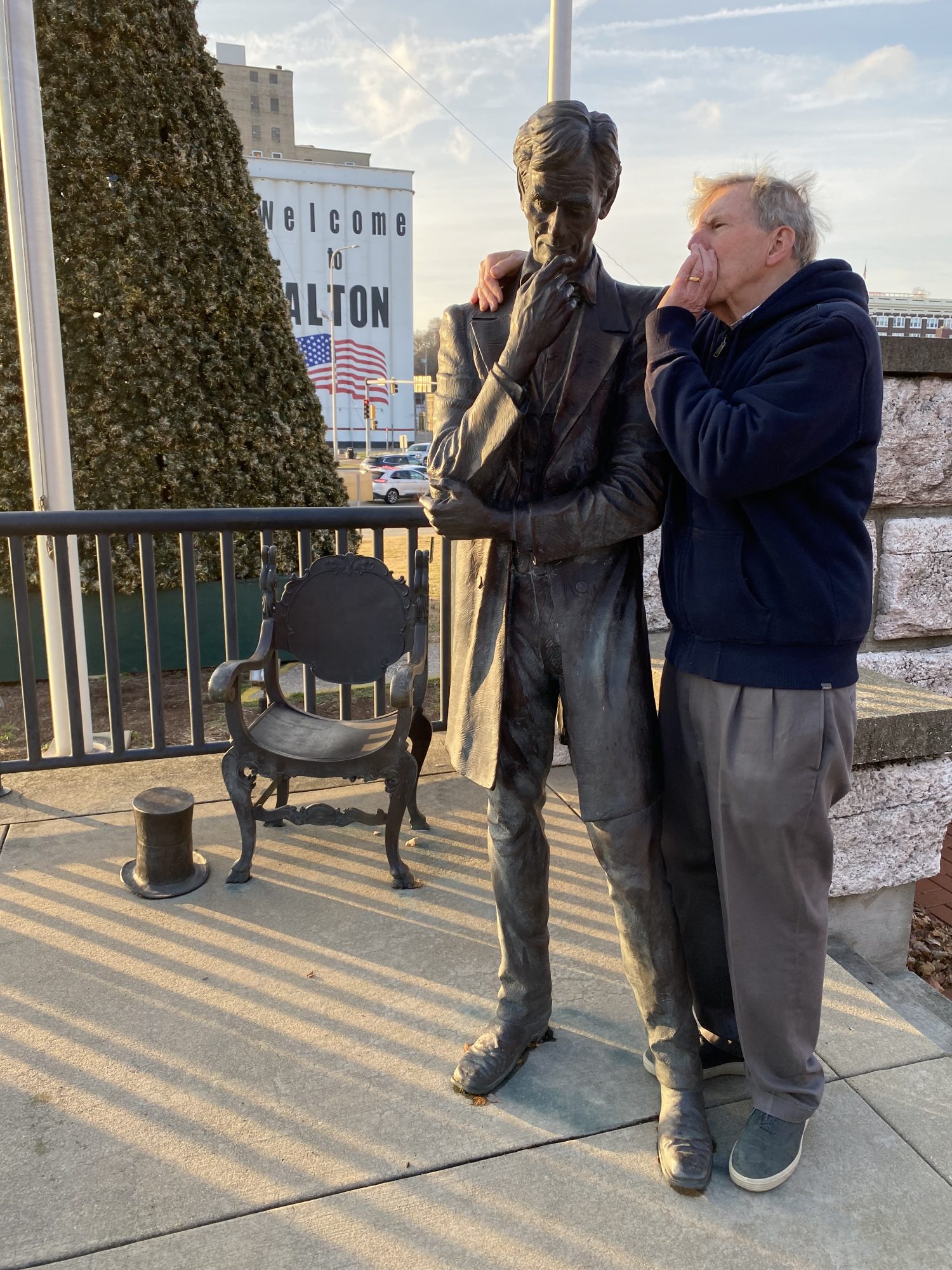
I do the same thing with my books. In Lincoln and Douglas, Abe sees a slave auction where a semi-naked young woman is fondled by a man on the auction block. He will become her owner. Abe is shocked and overcome—and the reader is too. I include Lincoln’s racist statement at the opening of the Charleston debate, but I also include his ringing antislavery statement at Alton where he calls slavery a moral wrong. I include Douglas’s summation where he says he doesn’t care about all the N-words in Christendom. To be true to the historical record, I spell out the full word in the text.
My readers understand why that material is in the books, and they appreciate the historical accuracy.
JW: One of the themes that emerges in your writing is Lincoln as a man alone. Can you talk about why you think that was important to Lincoln, and why it has been important for you to include in your books?
JJ: This harks back to where I began with Lincoln. I’ve been interested in the aloneness question all my life. It started in boarding school when I studied David Riesman’s book, The Lonely Crowd, which was published in 1950. It seemed such an utter paradox: that one could be engaged in life and really be alone.
In the mid-1990s, as part of our curriculum, my seventh-grade students were reading Newsweek (when it was edited by Jon Meacham). There was a weekly piece called “My Turn,” and when they saw one written by a teacher, they said, “You should write something about Lincoln for Newsweek.” I did. It was rejected three times, and I shared the rejection letters with them. One finally suggested, “You should send it to the [St. Louis] Post Dispatch.” I did, and it was published on Lincoln’s birthday. The article was entitled, “Lincoln and Stress,” and in it I speculated about how Lincoln handled stress when he was president. The only intimate friendship he’d known had eased away, and anyway, Joshua Speed was back in Kentucky. He had no Bebe Rebozo or Harry Hopkins. He did have colleagues, some of whom like Seward were close to him, but they always wanted something from him. He couldn’t trust them. His favorite child had died, which caused his wife to withdraw into her own world. He was completely alone. It was a recipe for stress, and I wondered how he’d survived it. There were five ways, one of which was going to the theater.
Over the years I’ve come to believe that Lincoln was not lonely and he was not a loner, but as a person he was existentially alone. He was a Melvillian “isolato.” In chapter 27 of Moby Dick, speaking about the crew of the Pequod, Ishmael tells us, “They were nearly all Islanders in the Pequod, Isolatoes too, but each Isolato living on a separate continent of his own.” What Lincoln does, which is lifesaving, is that he transcends his isolation and immerses in solitude. Solitude is enormously healthy. It’s what we all need, time to reflect and review. We need to think about who we are and what we are doing. I’m convinced that Lincoln did this, and it is a model for all of us—young or old.
In the pre-presidential Lincoln of my first three books, I’ve tried to track this thread through his early years. He learns it when he is young, and it is central to his ability to deal with his struggles, challenges, and defeats. Through it he develops resilience without which he will not survive the presidency.
In my fifty years of work with seventh and eighth graders, I also became convinced they could convert their loneliness into solitude. It’s a lifelong project, but it can and should begin in adolescence. Your wife Lauren gave me the magic word for what adolescents can do in solitude. They can muse. I love that concept. It’s not a heavy duty “who am I and what is my purpose in life,” although that can be part of it. It’s musing—thinking about life experiences—mostly about home life and friends at that age—but also dreaming. It becomes a habit of mind that gives life a rich fullness.
The educational psychologist, Howard Gardner, theorized that there are eight intelligences: linguistic, mathematical, spatial, kinesthetic, musical, natural science, and, most important, interpersonal and intrapersonal. The last is how you get along with yourself. I believe Lincoln had spades in intrapersonal intelligence.
JW: You and I first met when you were signing books at the Lincoln Home in Springfield. You seem to delight in interacting with the general public. What are some of the best experiences you’ve had with your readers?
JJ: I’m a teacher. I love interacting with children and their parents. The Lincoln Home is an ideal place for me to sign books. Since I’m not Doris Kearns Goodwin or Jon Meacham, I spend time chatting with each person who buys a book. I get to know them. In buying one of my books, I feel that my readers are trusting me to tell a good story. I feel as if I’m giving them a small piece of myself. I hope I’m fostering my mission to keep Lincoln’s legacy alive for the younger generation. Adults sometimes buy a book for themselves. For that reason, the books are known as “crossovers”—books that appeal to young adults and adults as well. I put my email in the back inside cover for each reader. I always respond to the emails I get. James McPherson taught us that. He sent handwritten notes to the first three thousand readers of Battle Cry of Freedom.
I have three favorite stories about my readers. One boy from Wisconsin sent me an email about the ending of Young Lincoln. He told me it made it feel so sad. I could have told him, “Wait till you read book five,” but I did my best to console him. A month later I received an email from a girl in Japan. She told me she loved the ending. When a boy from Michigan learned that there would be sequels to Young Lincoln, he said, “Ooh, it will be the Harry Potter of Abraham Lincoln!”
JW: So you’ve written three books now, but you have two more in the works. Would you give us a sneak preview of what you have in store?
JJ: You are kind to ask, Jon.
There will be two books for the presidency. The first one will end with the loss at Battle of Fredericksburg (“What will the country say?”) and the signing of the Emancipation Proclamation (the event for which Lincoln thought he’d be remembered by history). The second one will start in January 1863 and end on the afternoon of April 14, 1865, with Abe and Mary’s carriage ride.
At this point I am still marinating (David McCullough’s word) on who Lincoln is in the fourth book. When I get a better sense of that, I will begin.
I do want to finish by saying that I am so appreciative of the support I’ve received from the Lincoln community as I’ve written these books. It is such a warm and welcoming group. I could not have embarked on and continued with this project and adventure without their kindness, receptivity, and support. Thank you, Jon.
JW: It’s been wonderful hearing from you today. Thank you so much for joining us!