
An Interview with Wayne C. “Doc” Temple
An Interview with Wayne C. “Doc” Temple
by Alan E. Hunter
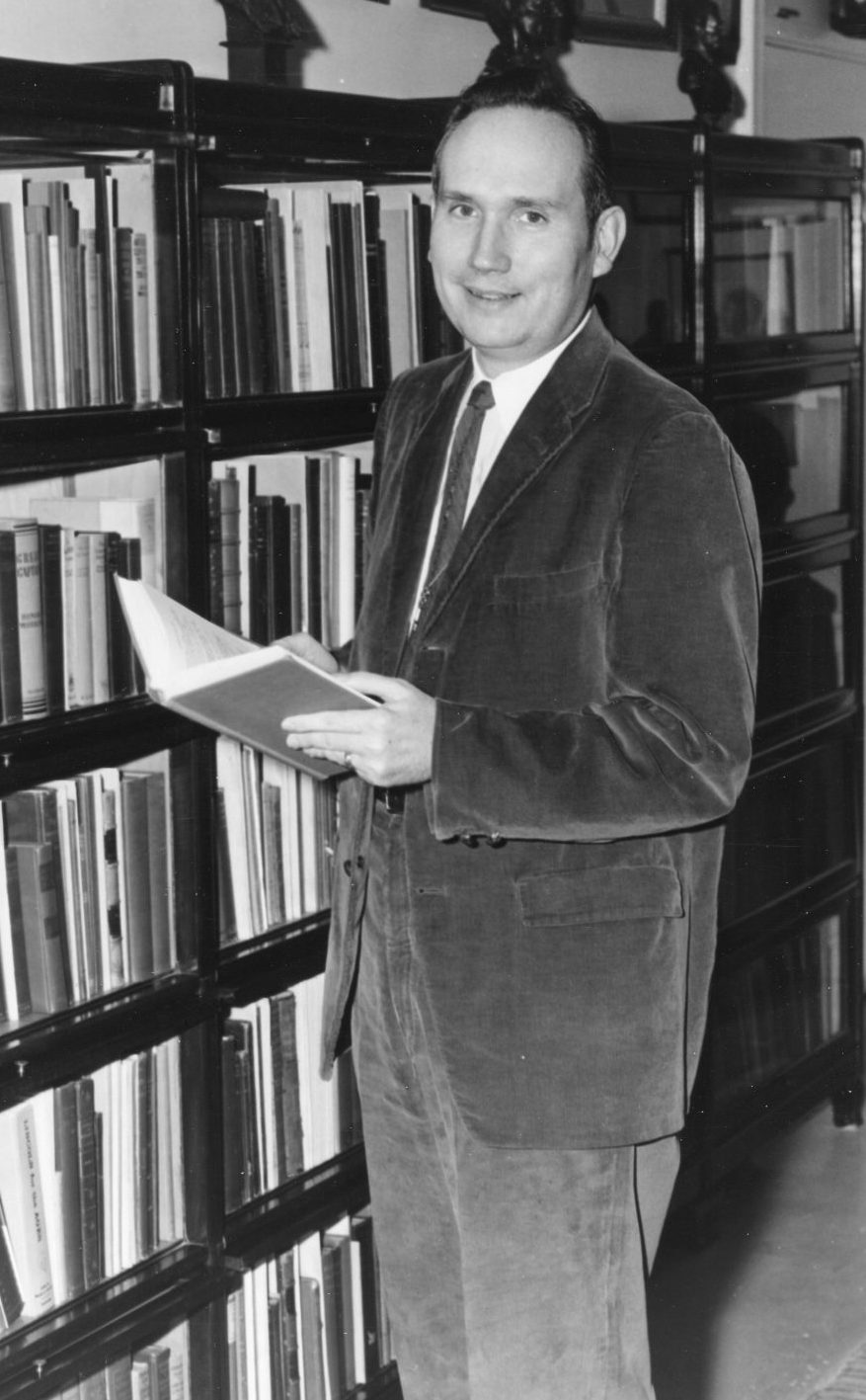
Dr. Wayne C. Temple, known affectionately as “Doc,” was editor-in-chief of The Lincoln Herald and in charge of the Department of Lincolniana at Lincoln Memorial University from 1958 to 1964. He continued in that editorship post remotely from Springfield, Illinois, until 1973. Temple graduated from the University of Illinois in 1949, studying under his mentor James G. Randall, the “Dean of Lincoln Scholars.” Doc served for over half a century with the Illinois State Archives (1964–2016), much of that time as Chief Deputy Director. Doc was an honorary member of the Abraham Lincoln Sesquicentennial Commission (1959–1960) and served on the advisory council of the U.S. Civil War Centennial Commission (1960–1966). He authored more than twenty books, mostly on Lincoln, and published over 600 articles, poems, reviews, and papers during his career. He died in 2025 at the age of 101.
Alan E. Hunter: Although you are most associated with Abraham Lincoln and Springfield, Illinois, you were born in central Ohio, a place not generally associated with Lincoln. Can you share how your Lincoln journey began?
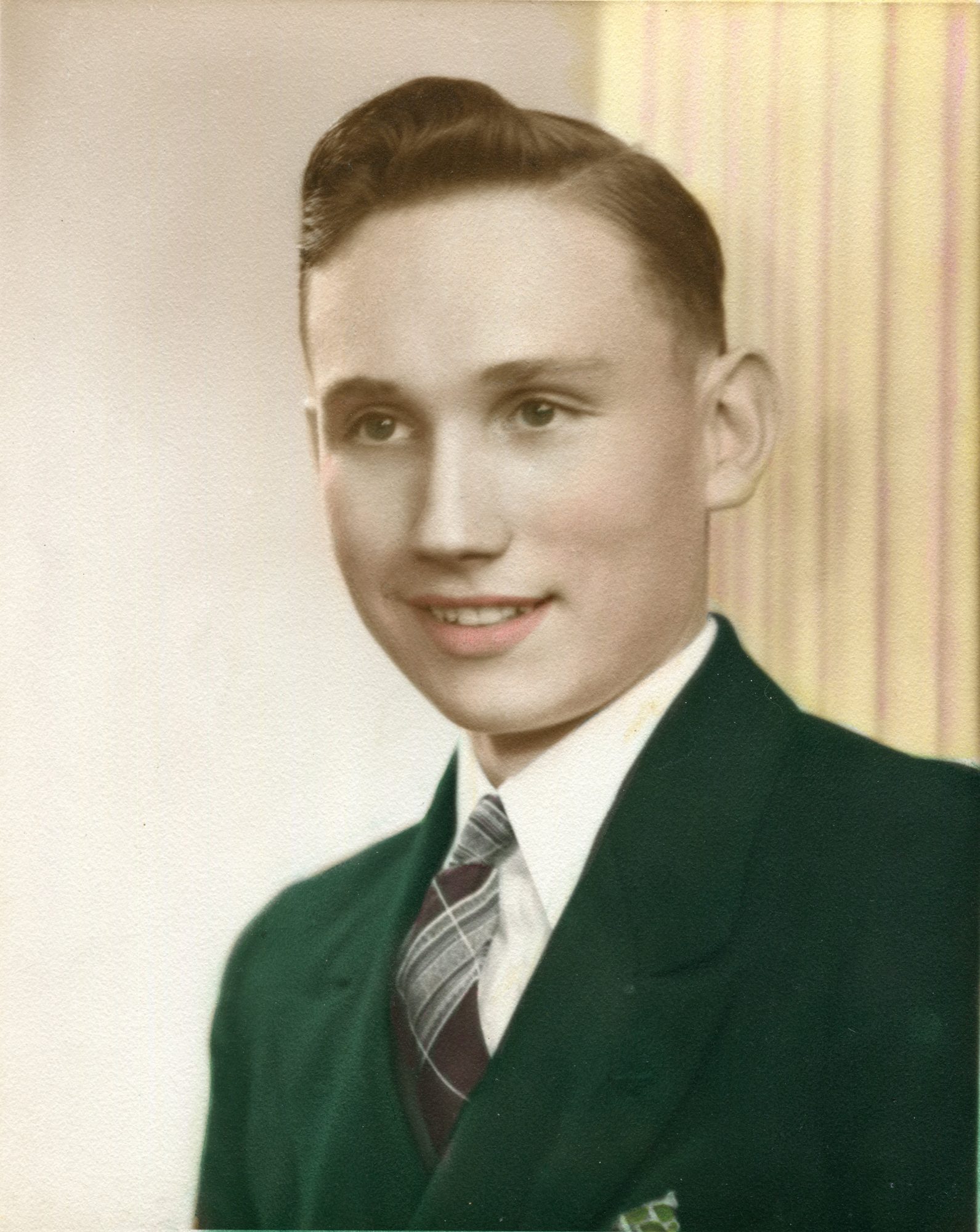
Wayne C. Temple: I was born on a small farm near Richwood, Ohio, on February 5, 1924. That’s the same birth date as Lincoln’s mother, Nancy Hanks Lincoln, so it’s sort of an omen, maybe. I was born an adult. I had no kids around the neighborhood, so I grew up fast. By the time I was nine, I had a Colt 44-40 revolver that I wore all the time. Prospect High School is where I graduated; Spring of 1942. In September, I entered Ohio State University, where I majored in chemistry. I lived in the Buckeye Club along with other athletes and students. I spent much of my time playing football and chasing nurses! I was two quarters there before I was drafted into the Army Air Corps. I made Corporal in the Field Artillery at Ohio State’s R.O.T.C. I was really proud of that. I had previously soldiered as a private with an infantry regiment in the Ohio State Guard. I rather liked soldiering. I was chosen for a brand-new branch of duty, the ASTP (Army Specialized Training Program). Secretly, I think they were trying to get some of their more prominent, intellectual types, not to die in the first days of the war. So instead of going to flight school, they sent us to North Carolina State College, now it’s a big university. In the summer of 1943, they put us on a train and didn’t tell us where we were going. It took two tedious days of slow travel to get from North Carolina to Champaign [Illinois]. I was in the first group of soldiers assigned to the University of Illinois. All of us carried an almost impossible number of class hours. If you flunked out of ASTP, they shipped you out to Armored Infantry at Camp Polk, Louisiana.
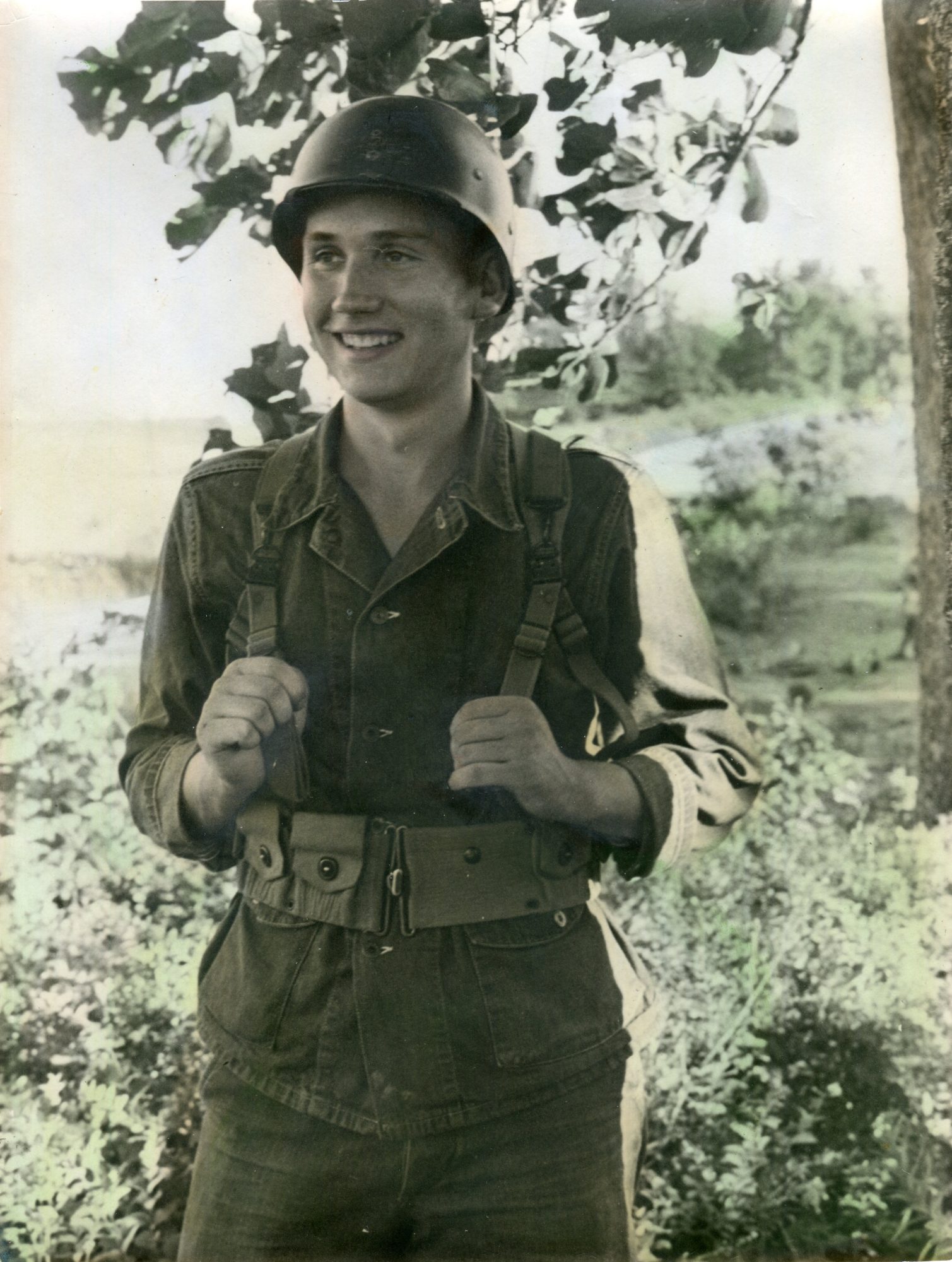
After completing my courses at the U. of I., I was transferred to a military camp in Neosho, Missouri. We finished that training, and I was assigned to the Army communications unit, plant engineering agency in Philadelphia. Our mission was to support the Air Corps and give it communications of all sorts, radar, etc. My shooting held me in good esteem. I qualified as a sharpshooter with the rifle and carbine, but my favorite weapon was the Thompson sub [machine gun]. I practically worshipped that weapon. I had my Colt .45 too. I could throw a case of ammo in the truck and shoot all day because they both used the same ammunition. Our mission citation read “subject to strafing by enemy aircraft.” We did get into a little trouble there, and my Thompson was very good at that. A German pilot dive-bombed us as we walked down the road. Came out of nowhere. We dove into the ditch, but I stood up and fired at the guy. I don’t know if I hit him or not, but he didn’t come back. I wasn’t so much scared as I was so damned mad. I thought, here’s a young pilot, the war is over as far as he’s concerned, the Luftwaffe had been shot out of the air, and he’s one of the few left, and he’s out here risking his life, and everybody else, when Germany is defeated and on the verge of surrender. I received the Bronze Star Medal for action under fire.
The war ended while I was in Germany. I served for another year in the Army of Occupation, installing air bases. Our unit ended up rebuilding a German Luftwaffe glider base near Frankfurt. We were informed it was a top-secret project. One day, we assembled on the air strip and were told to prepare for a special visitor. A plane descended, the tires screeched on the grass, and when the door opened, there stood General Eisenhower with a broad smile on his face. He always had a friendly smile for his troops. The supreme commander was quickly whisked off to Frankfurt. No fuss, no fanfare, no ceremony—that was the way it was when Ike used that little strip. The airfield became the official landing site for the Supreme Headquarters Allied Expeditionary Forces. Ike kept in touch over the next two decades. We exchanged letters while Ike was Supreme NATO Commander, President, and after retiring to Gettysburg.
I served in the Army from 1943 to 1946. I came back to Ohio, and the Dean of Admissions said your scholarship is still good, you don’t have to do anything, just do whatever you want to. I drove down to the Buckeye Club, which was built up above the football stadium about 10 to 12 feet off the ground, and I couldn’t find any of my buddies. I found out that nearly all of them were dead, and I thought “Oh my God,” they’re all gone. So sad that they never got to live to see what might have happened in their lives. I went home, and Dad asked if I was going back. I told him, “No, I don’t think I’ll ever go on the campus again. I’m not superstitious but it’s just full of ghosts.” Dad asked me what was I going to do now. I said, “I don’t know.” Dad said, “Well, you were out in Illinois during the war, why don’t you ask them if you can come back?” So, I called the admissions office and asked if they would accept me as a returning veteran working his way through college on the G.I. Bill. I said, “I’m Wayne Temple and I was there in engineering.” He said, “You want to come back?” and I said, “Yes, I do.” They welcomed me back. I was so delighted because I knew the campus and the buildings. While I was there in the service, I had a course with [James G.] Randall and I liked him right away. He was a wonderful teacher; he had a rattrap mind you know. He took a liking to me, so I took all the courses he was teaching. When my G.I. Bill was almost running out in ’49, and I was home helping dad make hay that summer, he said he knew I’d never be a farmer. Dad said, “Whatever you are, Wayne, you be a good one.” About that time, I got a telegram, unusual, not a phone call but a telegram. It was from Randall, and it said, “Would you consider being my research assistant this fall?” Here I was, just a poor Ohio farm boy working his way through college on the G.I. Bill and the privilege of a lifetime just landed in my lap: to work closely with Dr. Randall. The offer was like a fairy story come true.
AH: Can you share some of your recollections of J. G. Randall while you were at the University of Illinois?
Doc: Prof. Randall remembered me from my Army days on campus. I switched from English history to Lincoln studies even though Randall didn’t push me to do it. We soon became close friends. On February 22, 1949, I had asked Prof. Randall to sign the first two volumes of his Lincoln the President, and I suppose it was at that moment when Randall realized my interest was genuine. Soon, I was teaching Randall’s classes whenever he left campus or could not teach his class for one reason or another. And I was still an undergrad. Ironically, one of my duties was to assist Randall in completing his Lincoln the President series, the very series of books that I had gotten Randall to personally autograph. I served as Randall’s right-hand man from 1949 to 1953. During those years, I tended to try and get some of my papers published, which Randall liked to no end. He really took a liking to me, and I just admired him so much. He was so well known. He would give me his cards and say you know what the class is, you know where it’s at, you know the hours, and so forth, so I taught his classes. He was wonderful, I spent every day, generally even Saturday, over at his house. Of course, I had Sundays off. I did research for him and checked things.
AH: Did you and Professor Randall share other interests outside of Lincoln?
Doc: We often talked about politics. In the presidential campaign of 1952, my old boss, Gen. Dwight D. Eisenhower, was running as a Republican against Illinois Democratic Governor Adlai Stevenson. Randall was a Democrat; I knew that Randall fell in love with Adlai Stevenson’s ideas though he never really got involved in politics. He liked Adlai Stevenson which went against the grain for the Lincoln field. He always signed his name “J. G. Randall” because of it. He was named after President James Garfield, a Republican, but never signed his name that way. One day, Randall said, “You know Ruth is trying to do this biography of Mary Lincoln and I don’t drive, do you drive?” I said, “Yeah, I’ve got a little Champion six-cylinder Studebaker.” He said, “Could you drive Ruth and me down to Lexington to do some research?” We knew that Squire [Bill] Townsend had the biggest Mary Lincoln collection in private hands and that Squire [J. Winston] Coleman had the biggest Kentucky collection. Townsend bought Helm Place. Squire Townsend let Ruth copy all his Mary Lincoln letters. Holman Hamilton was on the University of Kentucky faculty, he was a journalist and a wonderful historian, so he’d get us into the places associated with Mary Lincoln.
Finally, Ruth said she wanted to see the old Mary Todd home. It’s on West Main Street. They tried to talk her out of it. She said, “I just want to walk on the floorboards where Mrs. Lincoln walked.” They said that it was in deplorable condition now, but she just wouldn’t take no for an answer. Coleman drove us down there and we parked in front of the place. Coleman said, “You sure you want to go in?” She said, “I absolutely want to go in.” And he said, “I just wouldn’t advise it unless we were customers.” She looked at everybody and said “Customers?” Coleman said, “Well, it’s a bordello.” Now she was a southern lady from Virginia, and she didn’t know what a bordello was. She said, “I don’t understand that.” Bill Townsend was too genteel to mention it, but Coleman wasn’t. He said, “Well Madame, it’s a whorehouse!” All the time Jim [Randall], her husband, is standing over there secretly laughing to himself about her embarrassment. And she said, “Oh my.” So, she didn’t get to walk on the floorboards. Still, it was a very successful trip and that’s how I met two of the men who were going to be trustees at Lincoln Memorial University. That trip stood me in good stead. That house was the subject of a character in Gone with the Wind. Margaret Mitchell’s husband was from Lexington and knew the story about Belle Brezing, she was the madame of the house. Bill Townsend wrote a book about her, it had a bright red cover, limited edition, very hard to find nowadays. Governors, Congressmen, and Senators all came to the parties at the bawdy house downstairs and then headed upstairs with the girls afterward. Margaret Mitchell used that story in her book. But instead of calling her Belle Brezing, she called her Belle Watling.
Randall was a person of rather short physical stature. He walked with a quick step and his eyes always had a sparkle in them. I found him to be a good lecturer and most thorough. His counsel was wonderful, he advised his students about research methods and sources, he met with them individually as needed, and he guided their papers and theses in minute detail. He was probably the kindest man I ever knew. Dr. Randall was indeed a rare person. He could draw, paint, and write poetry. For a hobby he raised tulips, getting bulbs from Holland. If he had not turned to history, painting would have been his field. In his early years, he had smoked a pipe, but when I knew him, he did not use tobacco in any form. He loved to sit in a rocking chair, rocking and organizing his thoughts for chapters of a book. He composed his chapters at first in longhand and then copied them on a typewriter, first draft—as I do. He typed fast but hunted and pecked. He had a wonderful research library, but he was not a Lincoln collector. Randall wrote for the scholars and his wife wrote for the general public. Ruth wrote all the “I Books”: I Jesse, I Mary, I Varina, I Elizabeth, and all that. Randall died at 10:49 pm on the 20th day of February in ’53 at McKinley Hospital on campus, the same date that Willy Lincoln died in the White House [in 1862]. Randall was in the last stages of Leukemia right before that. It was cancer of the blood, one of those pernicious things that attacks the bones too. They kept giving him blood transfusions, but it just never took. Randall knew so many people. He knew all the people in the Lincoln field. I owe so much to Randall.
On the first of September 1954, I came to Springfield. I went to work at the Illinois State Historical Society. They put me on the fifth floor of the old Centennial Building [now the Howlett Building] and gave me a nice room there, a typewriter and all that stuff, and any secretarial help I needed. It was there that I wrote my first book, Indian Villages of the Illinois Country: Historic Tribes. I met Lois while I was finishing that book. Lois Marjorie Bridges, a supposed descendant of the General Ulysses S. Grant family, worked as cashier at Johnny’s Drug Store restaurant and cigar stand that was on the basement level of the old Abraham Lincoln Hotel. September 22, 1956, we were married. We never had children, and I remained childless for my entire life.
I was walking down Fifth Street crossing Capitol. In the middle of the street, I met Ralph Newman [owner of the Abraham Lincoln Bookshop in Chicago]. He was one of the trustees of Lincoln Memorial University. I’d met him too through Randall and he said, “Oh Wayne, Gerald McMurtry’s gone, he’s back in Fort Wayne and we want a real scholar with a Ph.D. in Lincoln.” He said Gerald had an honorary degree and he was all right, but he’s gone now, and we really want one. And I said, “Well I’ll have to talk to my wife.” So, I asked her, “Would you mind if we went down to Harrogate, Tennessee? I’d have an endowed chair of history, the John Wingate Weeks Chair of History as a full professor, and the salary is pretty good I guess.” And she said, “Whatever you want to do is fine with me.” So that’s how I got to LMU.
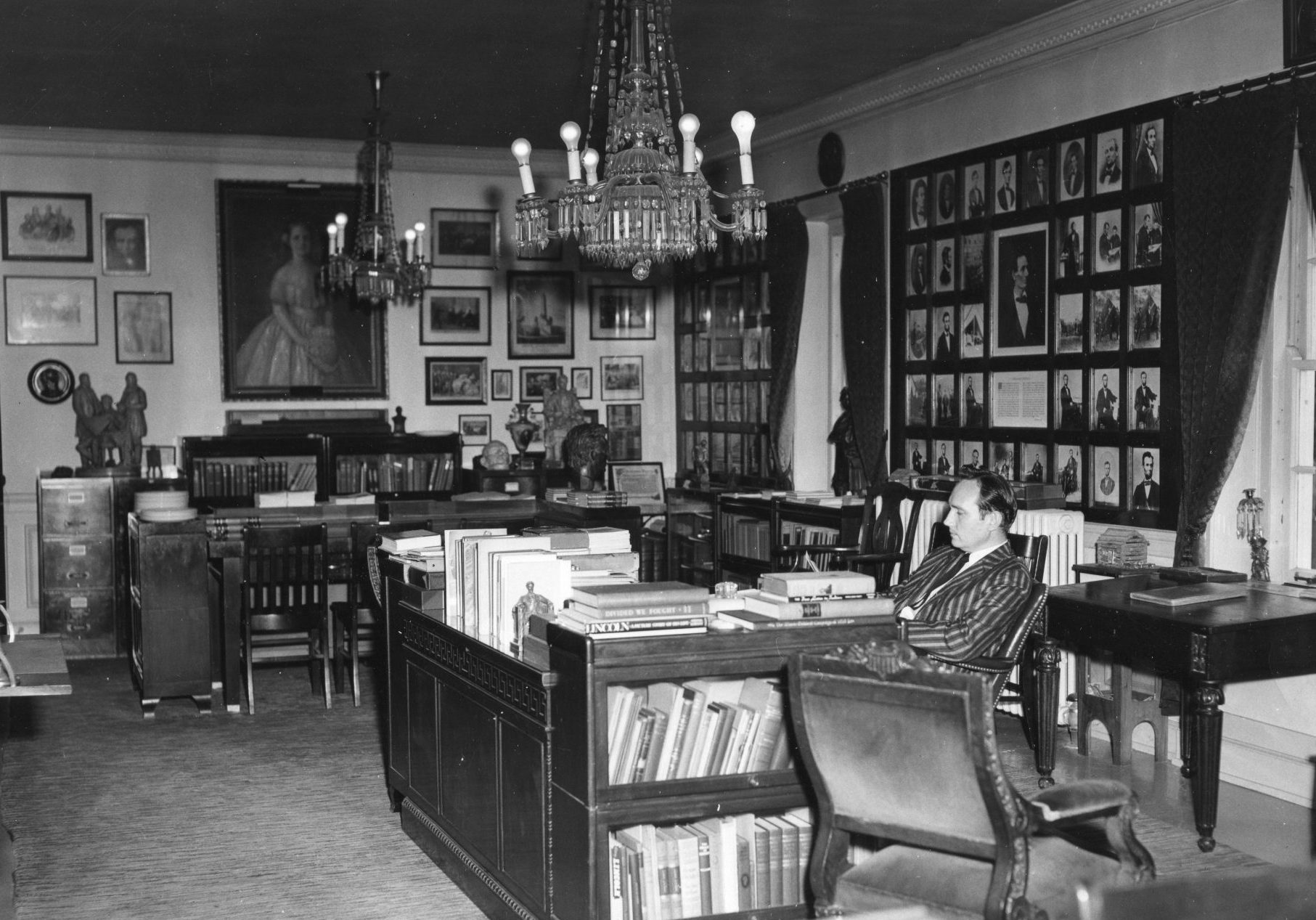
AH: Can you share some of your recollections of your time at Lincoln Memorial University?
Doc: When Lois and I arrived on the LMU campus on May 3, 1958, it was deserted. I will never forget, Robert Lee Kincaid was the President; he was a journalist at Middleboro. He was very cordial, but we couldn’t find anybody there on campus, not anybody. It was Derby Day. So, when the race was over, they all started coming back, and they said, “We’re sorry, we knew you were coming, but we just had to go and see the race. We knew you’d find your way around.” So, they put us up at the Munson House. At the time, it was a test school for home economics majors. It was a fine, brick place furnished as a complete household so home-ec students (girls, of course) could live and perform all the work it takes to run a home—purchasing, cooking, cleaning, etc. At the time, there were no students there. I loved the students, of course, and I guess they liked me. Kincaid said, “You’re in charge of anything you want to do, anything you want.” I was employed in a dual capacity as a member of the administrative staff and a member of the faculty. My title was Director of the Department of Lincolniana. In that position, I was in charge of the Lincoln and Civil War collections. I also became the Director of the LMU Press. I made my office in the Lincoln Room in Duke Hall.
AH: Do you recall those early years as Director of the Lincoln Memorial University Press?
Doc: I became editor-in-chief of The Lincoln Herald on May 3, 1958, the same day I arrived at LMU, and I moved the office right into the Lincoln Room in Duke Hall, which was a sacrosanct place. So, I put typewriters in there. Mrs. [Lanta Opal Strunk] Livesey was the Dean of the women’s business department, and she always picked out the best of her students to give me help. So, for the full eight hours, I had student help; when the girls weren’t in class, they worked with me. One would leave, and another one would come in. They could sit there and take shorthand like a demon. Some of them said I typed better than they did, but that was an exaggeration. Lois fell in love with the Zetas, the ZTKs, the sorority. She became their sponsor. And she just loved it. When they’d go on a spring vacation, we’d both go with them, and we kept them out of trouble. Lois fit in just like a glove. Kincaid said, “You know, we’re so tickled that you and Lois could come down here in the mountains.” And I said, “You know, I’m a flatlander, but it’s a beautiful country.” So, I’m a full professor and have full rein over it. When I moved down to LMU in ’58, President Kincaid had been editing The Lincoln Herald; he was a good newspaper man, but he didn’t do it like you and I as scholars would do it. He started every issue with page 1, so luckily, that was the first issue of the year, Spring, so I decided to start the summer issue with the page number after the last issue page to continue it. I looked at it; and here’s this beautiful cover. I asked Kincaid who did that. He said, “That’s Lloyd Ostendorf of Dayton, Ohio. He’ll be back here for commencement.” I asked if he made any commitments with him, and Kincaid said, “No, Lloyd had just submitted it as a cover, and I put it on there.” So, when he came back for commencement in June 1958, I asked Lloyd if he would like to be the art editor of the Herald. Oh God, he really jumped at it. That was the first time I met him. Lloyd was such a talented guy. He had worked with Al Capp [a nationally syndicated cartoonist] in New York. So, we became very close, and from then on, I did research for him. Anyhow, that’s how we met. As the years went by, I continued to research and write the captions for his drawings. If he needed a photo of a building or a person, I’d try and dig one up for him. We worked that way and remained good friends until he died in 2000.
In 1959, because of my Lincoln writings, I was named an honorary member of the National Lincoln Sesquicentennial Commission and secretary-treasurer of the National Lincoln-Civil War Council. Down at LMU, I taught English history and American history. I remember some of the other professors down there said, “I’m not taking over 25 students.” But I didn’t think that was fair, so I never put a limit on my classes. I learned from my days at U. of I. not to give multiple choice questions; I always gave essay questions, so you can imagine how much time it took to read all those essays. The students appreciated that, and several times they voted me teacher of the year, but I don’t know how I did it all. I guess it was because I was younger and worked day and night. At the time, I was teaching class, grading essays, answering correspondence, and editing The Lincoln Herald simultaneously. I handled the book reviews in the mail and all that stuff. They treated me well; they gave me the Lincoln Diploma of Honor while I was still on campus. They rated that higher than an honorary doctorate degree. Now, there’s a medal that goes with it, which they later sent me. That workload and changes on the Board of Directors made it harder for me to stay. That LMU board had too many preachers on it. By the end of the Fall term in 1963, I had made up my mind: I was leaving LMU. By then, Lois had developed some heart trouble and wanted to go back home. Lois still had family in the area. She said, “I’d like to die in Springfield,” and I said, “I miss Springfield too.” So, on May 8, 1964, we left LMU. I didn’t even say goodbye or anything, called a moving company, and came back to Springfield. It was a sad day, but they kept me on the board, and I continued to edit The Lincoln Herald after we moved back to Springfield, over 15 years if I recall.
AH: Can you talk about your return to Springfield?
Doc: In ’64, they called me and asked me to come back. Fortunately, for my whole life, I’ve never had to ask for a job. I’d been at the State Museum, of course, while writing that Indian book, and they asked, “Would you come back and replace Marion Pratt, Harry Pratt’s wife?” She’d worked there as their Lincoln expert. She died, and they wanted me back. It happened just like that, and I said, “Thank God.” Anyhow, that’s how I got back to the archives. They had so much Lincoln stuff in the archives, all the papers from when he was in the legislature there, correspondence he had with the governors and other people, and so, they wanted a Lincoln person. They treated me very well, and I enjoyed it, and they didn’t play politics with me. From 1964 to 2016, I worked for nine different Secretaries of State and ten different Governors representing both parties. I settled into the business of the archives with relative ease. I worked with surveyors, lawyers, libraries, museums, and other organizations in Illinois every day. I enjoyed my job. I continued working on The Lincoln Herald from Springfield until 1973. During those years, with the help of my friend Lloyd Ostendorf, I think we really boosted the quality and readership of The Lincoln Herald. I was able to work with so many luminaries during my time with The Lincoln Herald: Carl Sandburg, Bruce Catton, Shelby Foote, David Donald, U.S. Grant III, Otto Eisenschimmel, Vachel Lindsay, Elwell Crissey, Allan Nevins, Ruth Painter Randall, Jesse Stuart, Adin Baber, King Hostick, Cliff Egan, General William Westmoreland, Norman Rockwell, and so many more.
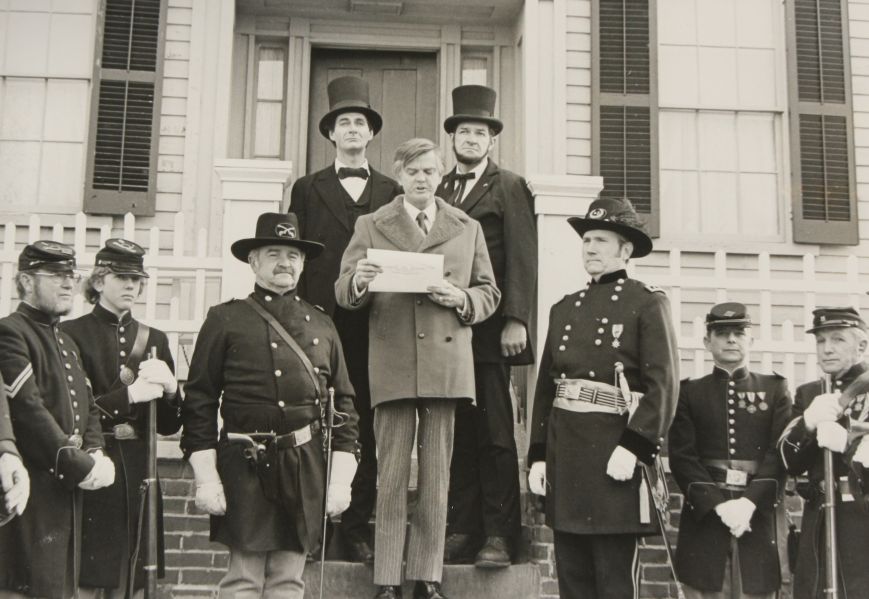
Although I backed away from the Herald editorship, I continued to write articles for them. I concentrated on Lincoln books, a few of which I had started at, or before, LMU. I also found time for other projects in Springfield. I worked to remap the Boy Scout trail, organized the Boy Scout pilgrimages to the Lincoln Tomb, researched and plotted the Lincoln Post Road and Grant’s March to Fame highways, and helped create the Long Nine Museum in Athens, Ill. I also helped reorganize the 114th Illinois Volunteer Infantry Regiment in 1969. That’s how I got my 4-star General rank. It’s official, it’s not a make-believe thing. My wife Sandy became my personal chauffeur and Aide-de-Camp with the military rank of Colonel. They issued commissions on the same forms as the Governor gave Ulysses S. Grant back in 1862. We did a lot of official programs, dedication ceremonies, and escorted the Governor and Congressmen to events, especially out at the tomb and the Old State Capitol like we did for Richard Nixon in 1971. The 114th is still active out at the tomb.
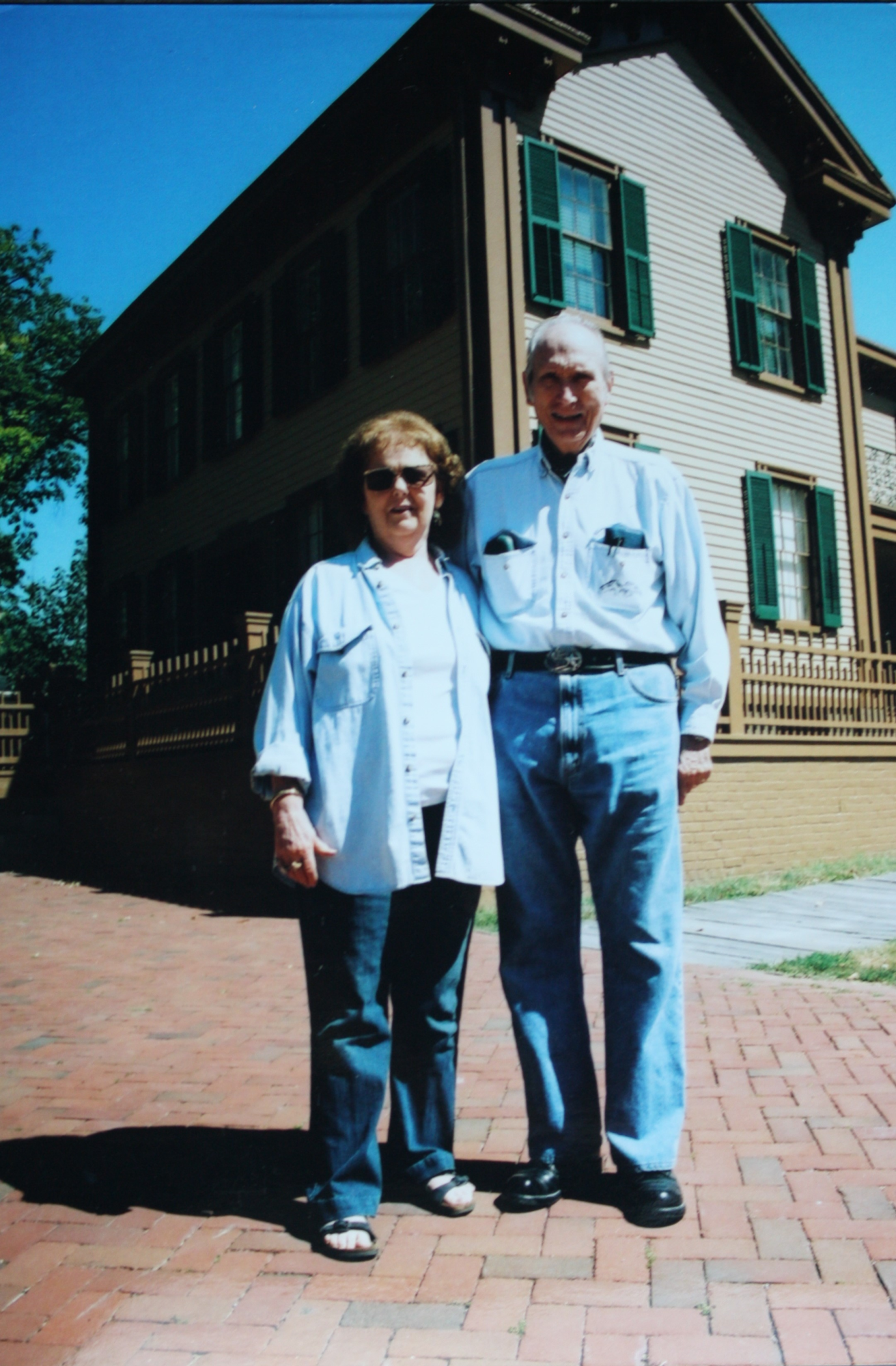
By the early 1970s, my wife’s health was failing; she suffered from high blood pressure for the last decade of her life. After three or four heart attacks, Lois died on April 21, 1978. She was a good girl and a very nice lady. She now lies in Oak Ridge Cemetery, where the immortal Lincoln rests. After a very tough year, I married Sunderine Wilson Mohn [aka Sandy], a tour guide at the Old State Capitol, on April 9, 1979. She was a young little thing, and it made my life complete once more. I’ve had a storybook life. Sunderine was one of the greatest things in my life when I met her by chance. It was like I’d been dealt a Royal Flush in spades. She was perfect for me, and I guess I was perfect for her. Our hobby became traveling. We traveled all over Europe, and she loved the architecture and the art. We were married for almost 43 years. She worked 41 years at the Old Capitol, and she’d always say, “Doc, we’ve done things people only dream about.” Sandy was so good about everything, never had a problem with anything. Everything was so damned smooth.
AH: You wrote most of your books after you returned to Springfield, right?
Doc: Yes, you might say that moving back to Lincolnland fueled my urge to write. In 1986 I wrote a volume for the National Commission, Lincoln’s Connection with the Illinois and Michigan Canal, His Return From Congress in ’48, and His Invention. One about the Lincoln Home, By Square and Compasses: The Building of Lincoln’s Home and Its Saga in 1984, and another in 1982, Stephen A. Douglas: Freemason, both for the Masonic Book Club and The Illinois Lodge of Research. One book holds a special place in my heart. Every time we passed the building Sunderine would say, “We’ve got to write a history of MY building. MY building.” So, we wrote Illinois Fifth Capitol: The House That Lincoln Built and Caused to be Rebuilt (1837-1865) in 1988. In 1995, I wrote Abraham Lincoln, from Skeptic to Prophet. The book was written over a 30-year period, so I changed things quite often. Things came in that weren’t discovered chronologically. I think it will last forever. That book made the top 100 Lincoln books of all-time. I’m especially proud of that. I wrote The Taste is in My Mouth a Little: Lincoln’s Victuals and Potables in 2004. It is a book on Lincoln’s food. I call it “Lincoln and his eats” and I started it while I was at LMU. In 2007, I wrote Lincoln’s Travels on the River Queen During the Last Days of His Life. In 2015, I wrote Lincoln’s Surgeons at His Assassination and Other Interesting Figures with a Lincoln Connection. In 2017, I wrote Lincoln’s Springfield / Pittsfield Connection: A Tale of Two Cities. And in 2019, I published the book that took me the longest to write: Lincoln’s Confidant. The Life of Noah Brooks. I started working on Brooks in 1949 as my master’s thesis under Randall at the U. of I., so it was 70 years start to finish. That might be some kind of record, I don’t know.
AH: Do you have any advice for the authors of today?
Doc: Always use primary sources whenever possible. You may have to dig for them, but they’re out there if you keep looking. Diaries, letters, logs, newspaper articles, family papers. Try for discovery and you will not be disappointed. Write truthfully and in your own voice, don’t varnish the facts. Most importantly, don’t worry about attribution any more than you have to. Cite your sources but remember that the goal is always to get the information out there.
AH: After a lifetime of Lincoln scholarship, do you have any reflections you’d care to share?
Doc: I’m so lucky, I’ve achieved more than I ever dreamed I would: Member bibliography committee Lincoln Lore, since 1958. Major Civil War Press Corps, since 1962. Trustee, regent Lincoln Academy Illinois, 1970-1982. Fellow Royal Society Arts (life). Life Member National Rifle Association. Knight Templar (Red Cross Constantine). Lincoln Group District of Columbia (honorary). Lincoln Fellowship of Wisconsin. Military Order Loyal Legion United States (honorary companion). Masons (33 degree). Member: Kappa Delta Pi, Phi Alpha, Phi Alpha Theta, Chi Gamma Iota, Phi Beta Kappa, Tau Kappa Alpha, Alpha Psi Omega, Sigma Pi Beta, Sigma Tau Delta, Zeta Psi. At the 150th sesquicentennial celebration of the University of Illinois, I was selected as one of the school’s 150 most distinguished graduates, which I consider one of my greatest honors. I’ve had a wonderful life. I’ve enjoyed every bit of it. I look back at those moments and dream about them. I’ve managed to do a lot of interesting things in my life, more than I could have ever imagined doing as a poor farm boy back in Ohio. But without question, marrying Sunderine was the greatest thing I ever did. I just miss her so. Well, there you have it. That’s the story of my life. I’ve had a wonderful life, but it’s narrowing down now.
⁓
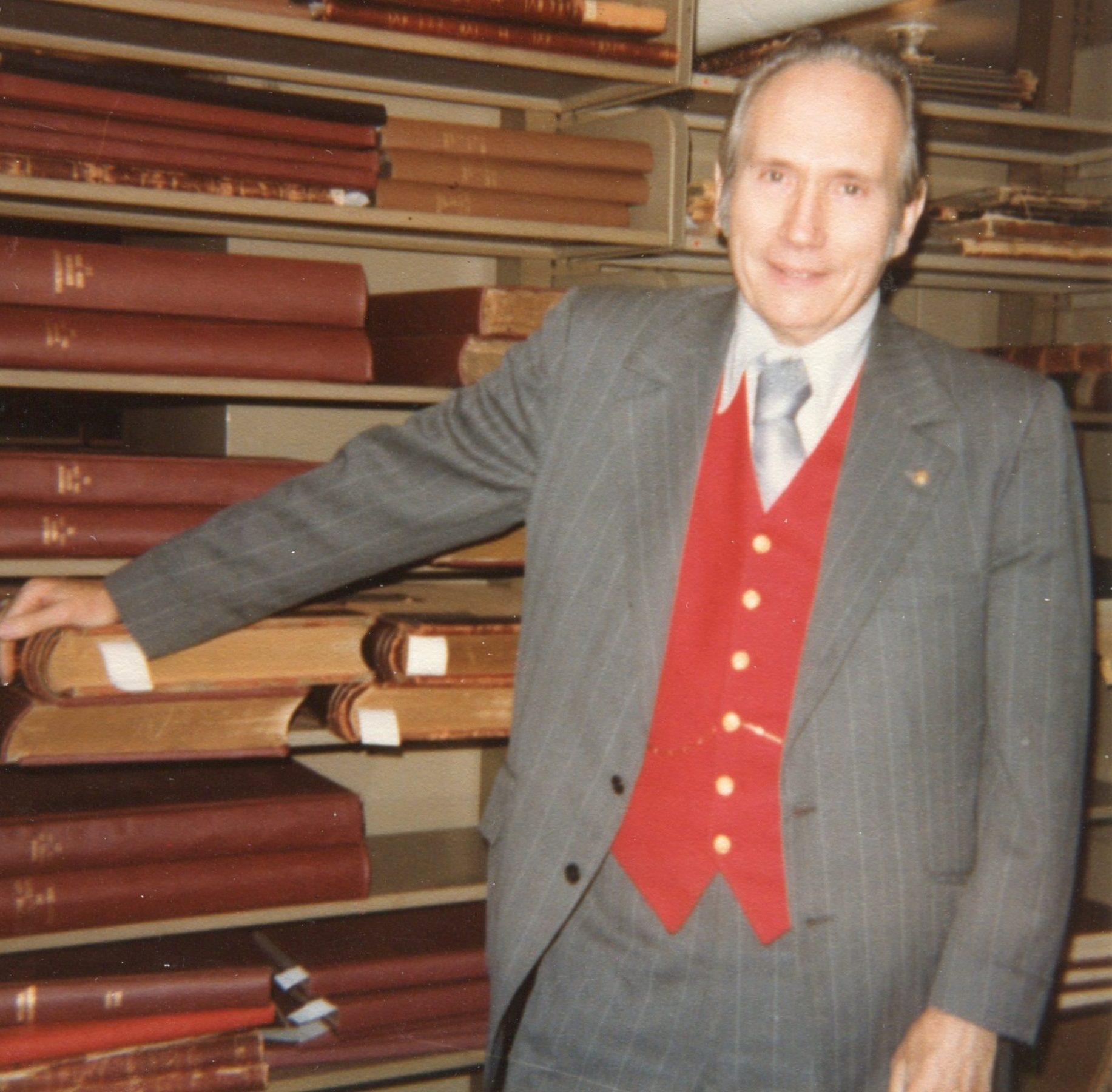
Doc lasted over 56 years with the state of Illinois, a record that may never be equaled. Illinois politics can be a challenge for any citizen, let alone a public servant. Can you imagine having to navigate those political waters? Every few years, a regime change. Doc had a special skill. He could get along with anybody, regardless of party. His record is simply amazing.
This article is a result of hundreds of hours of recorded conversations with Doc Temple in his home at 1121 S. 4th Street Ct. in Springfield. Doc lived in the house from 1971 until his death on March 31, 2025. These informal meetings were arranged by Dr. James Cornelius, who began meeting with Doc in 2019. The excerpts here were gathered for my book, Thursdays with Doc: Dr. Wayne C. Temple’s Recollections of Springfield & Lincoln. Although I first met Doc and James in 2010 while working on a book about Lincoln collector Osborn H. Oldroyd, my participation began in the summer of 2022 and continued until Doc’s death. The generous invitation from Dr. Cornelius was first billed as an informal chat about Abraham Lincoln over Pabst Blue Ribbon and beer nuts. How could anyone resist such an invitation?
Alan E. Hunter has written a column for the Weekly View newspaper in Indianapolis for twenty years. He is the author of several books, including two on the Historic Indiana National Road as well as Osborn H. Oldroyd: Keeper of the Lincoln Flame (2024), The Petersen House: The Oldroyd Museum and the House Where Lincoln Died (2020), and Thursdays with Doc: Dr. Wayne C. Temple’s Recollections on Springfield & Lincoln (2024). He is currently writing a book about Jewish Lincoln scholar Emanuel Hertz.