
The Collected Works of Willie Lincoln
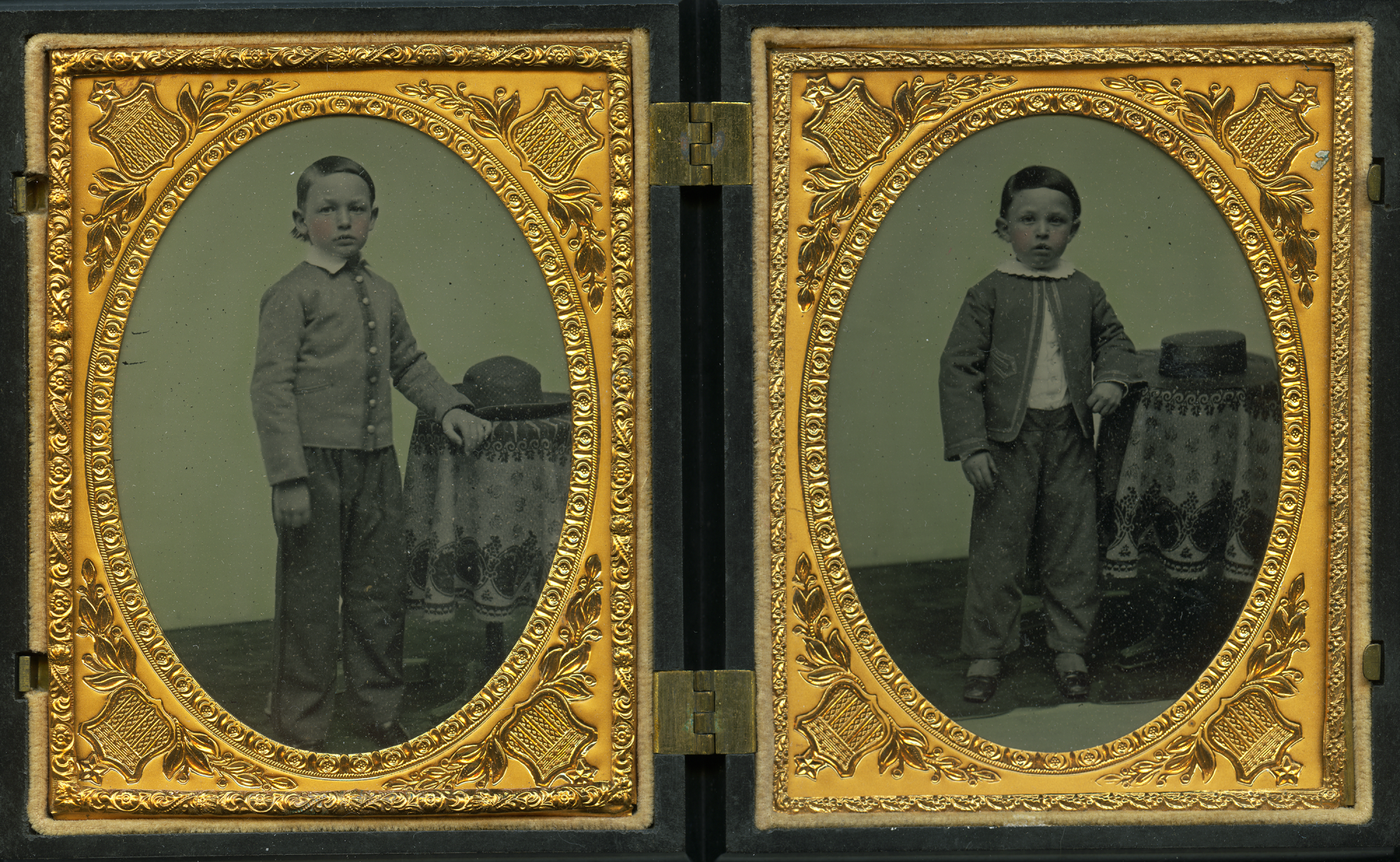
The Collected Works of Willie Lincoln
by Samuel Wheeler
Four months after Willie Lincoln’s death on February 20, 1862, Senator Orville Browning encountered President Abraham Lincoln at the New York Avenue Presbyterian Church in Washington, D.C. When the service ended, the president invited him back to the White House. There, in the library, Lincoln pulled a scrapbook from the shelf and began turning its pages. Inside were “some memoranda of important events,” Browning recalled—items from the inauguration of Illinois Governor Richard Yates, programs and articles from Lincoln’s own inauguration, the names and dates of Civil War battles carefully inscribed in a neat child’s hand, as well as newspaper clippings about the deaths of prominent soldiers. Lincoln explained that he had just discovered the scrapbook and believed it was “made by his little son Willie.”
Unfortunately, the scrapbook no longer exists. If it did, it might offer a rare glimpse of the Civil War seen through the eyes of the president’s precocious child—a boy whose parents never fully recovered from his untimely death.
Yet not all traces of Willie’s observations are gone. Today, six of his letters, as well as a poem, survive. Taken together, they form a small but poignant collection—what we might call “The Collected Works of Willie Lincoln.” They offer a glimpse of a remarkable child making sense of the world around him.
Historical commentary introduces each of Willie’s letters in the sections that follow. The transcriptions preserve original spelling and grammar, with periods silently supplied at the ends of sentences, and uncertain words enclosed in brackets. The sole exception is Willie Lincoln’s letter to Henry Remann on May 25, 1861, in which his original brackets have been retained. Unless otherwise noted, all letters are held at the Abraham Lincoln Presidential Library in Springfield, Illinois.
Willie Lincoln to Edward Rathbun, April 24, 1859
One of Willie Lincoln’s earliest friends was a boy named Edward Rathbun, who lived directly across the street. Two years older than Willie, Edward moved to Springfield from New York with his mother and younger brother shortly after his father’s death. They initially stayed with their uncle, Rev. Noyes W. Miner, a close friend of the Lincolns. On June 1, 1858, Edward’s mother, Hannah, married Dr. John Henry Shearer, a physician who supported Lincoln and the Republican Party. After the Shearers moved to Pennsylvania in 1859, Mary Lincoln and Hannah exchanged a number of letters.
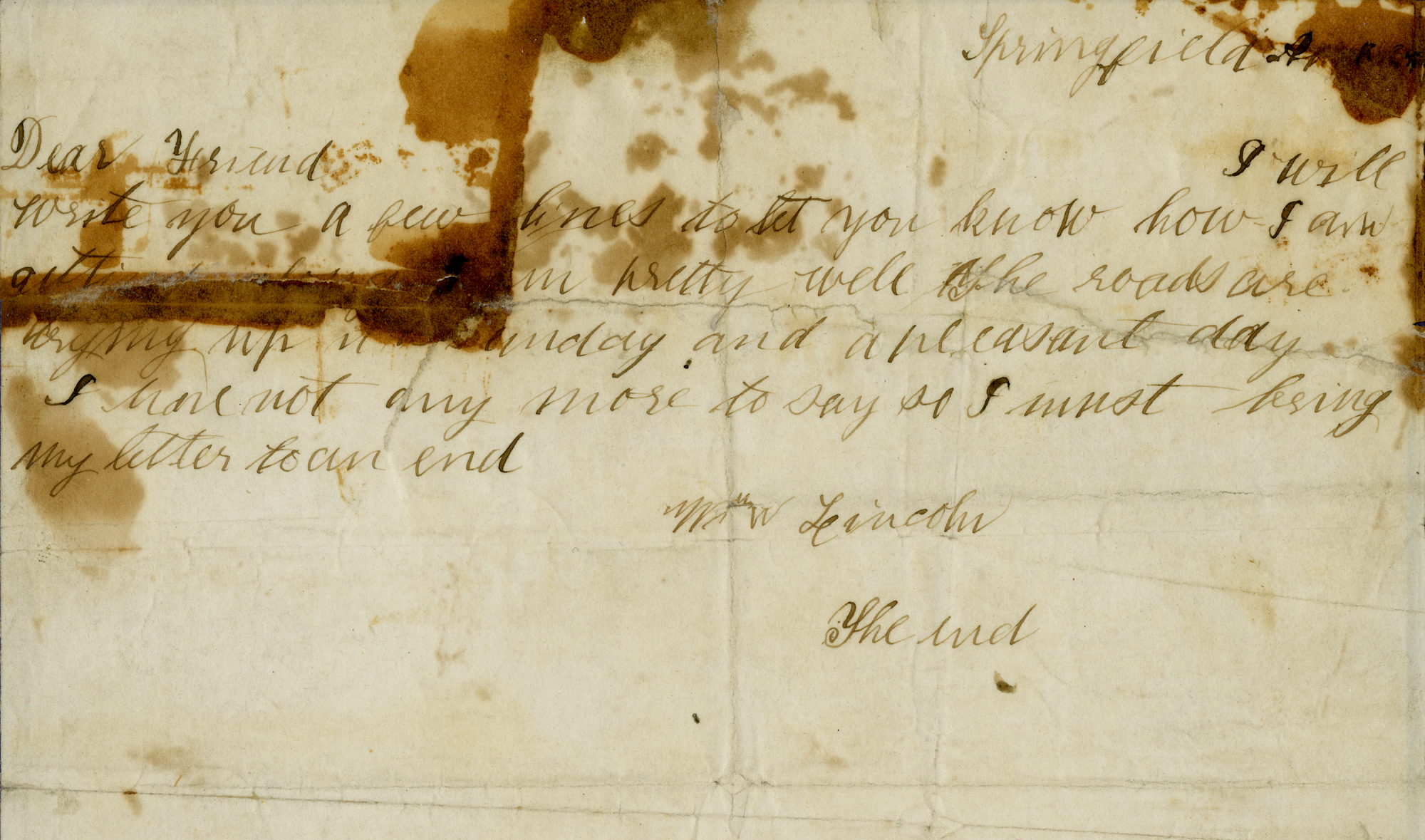
From this friendship comes the earliest surviving letter written by Willie Lincoln. The note is difficult to read today because the paper is stained. According to a 1901 recollection, the blotches on the letter were chocolate, the result of Edward storing Willie’s letter in a box of candy. Although the date is smudged, the letter was likely written on April 24, 1859. On that Sunday, Mary Lincoln wrote a long letter to Hannah Shearer, filled with Springfield gossip. She probably encouraged her eight-year-old son to write a note to Edward, enclosing it with her own.
Springfield A[pril] [24] [1859]
Dear Friend
I will write you a few lines to let you know how I am getting [along]. [I am] pretty well. The roads are drying up. It is Sunday and a pleasant day. I have not any more to say so I must bring my letter to an end.
Wm W Lincoln
The end
Willie Lincoln to Henry Remann, June [6?], 1859, University of Chicago
Willie Lincoln’s most frequent correspondent was Henry Remann, who lived just six houses away. The two boys shared a tragic family bond. Henry’s father died of consumption on December 10, 1849; just two months later the Lincolns’ three-year-old son, Eddy, died of the same disease. The two grieving families comforted each other. Widowed and pregnant, Mary Remann gave birth on April 6, 1850, naming her son Henry, after his father. Mary Lincoln, still mourning Eddy, gave her friend Eddy’s clothing—many pieces sewn by her own hand—and encouraged her to save them for young Henry. Willie thus grew up playing with a neighbor boy who wore the clothes of the brother he never met.
In June 1859, Willie traveled with his father to Chicago, where he probably had business in the federal court. It was likely the eight-year-old’s first train ride—a thrilling experience for a boy who loved railroads, collected toy trains, and pored over railroad timetables. Chicago, too, was a wonder. When Willie was born in 1850, the city held about 30,000 people, but by 1859 the population had swelled to nearly 100,000, making it the largest city he had ever seen. The Chicago Tribune reported that Lincoln was in Chicago as early as June 1, and on June 8 the paper reported that both Lincoln and Stephen A. Douglas were in town at the Tremont Hotel—the city’s premier hotel and the location where the pair launched their celebrated Senate campaign the previous year.
In this letter to Henry, Willie captured the excitement of his trip. He framed his experience in pairs, describing how everything in his hotel room came in “twos”—one small for himself and one large for his father. The rhythm in his storytelling is reminiscent of popular fairytales, especially “The Story of the Three Bears,” first printed in 1837 and later adapted into the familiar “Goldilocks” version in 1850, the year of Willie’s birth.
Chicago Springfield Ill June 1859
Dear Henry
This town is a very beautiful place. Me and father went to two theatres the other night. Me and father have a nice little room to ourselves. We have two little pitcher[s] on a washstand. The smallest one for me the largest one for father. We have two little towels on a top of both pitchers. The smallest one for me, the largest one for father.
We have two little beds in the room. The smallest one for me, the largest one for father.
We have two little wash basins. The smallest one for me, the largest one for father. The weather is very very fine hire [here] in this town. Was [at] the exhibition on Wednesday before last.
Your Truly
Willie Lincoln.
Willie Lincoln to Henry Remann, May 3, 1861
While Robert Todd Lincoln was away at school in the east, Willie and Tad had front-row seats in Springfield to witness their father’s political rise, featuring torchlit Wide Awake parades, rallies, and celebrations. They were at home in May 1860 when a delegation arrived to formally tell their father he had secured the Republican nomination for president. During the ensuing campaign, Willie eagerly joined the excitement, delivering impromptu speeches from the same porch to neighborhood children and passersby, urging them to support “Old Abe.”
The most memorable figure that season was Elmer Ellsworth. He was a confident New Yorker, handsome, magnetic, and brimming with energy. Though he was only 23 years old, he was already something of a celebrity. He had commanded the National Guard Cadets of Chicago—a Zouave company famous for their acrobatic drills and precise formations—on a twenty-city northern tour that summer. In the fall of 1860, he came to Springfield, taking a desk in the Lincoln & Herndon law office while throwing himself into the campaign. He delivered stump speeches, worked tirelessly for Lincoln’s election, and became a fixture at the Lincoln home, where Willie and Tad followed him with wide-eyed admiration. After the election, Ellsworth accompanied the Lincolns on their inaugural journey east, serving as one of Abraham Lincoln’s bodyguards. To the boys, Ellsworth was more than a friend—he was a larger-than-life older brother, soldier, and showman rolled into one.
When they arrived in Washington, Ellsworth became a part of the household. He had his mail sent to the Executive Mansion and even slept in Robert’s room while the president’s oldest son was away at school. He grew close to Lincoln’s secretaries, John Hay and John Nicolay. When Willie and Tad caught measles in March 1861, Ellsworth did too.
By the time Willie next wrote to Henry Remann, the country had been utterly transformed. In the 81 days since the Lincolns left Springfield, the war began. After Fort Sumter fell, Lincoln called for 75,000 volunteers. Ellsworth immediately went to the White House, announcing his plan to raise a regiment in New York City drawn from the city’s fire companies. Within three days of his arrival, he had enlisted 1,200 volunteers. The men elected Ellsworth their colonel and began preparing for war.
Ellsworth’s choice of firemen was no accident. In 1861 New York firefighters were known as “b’hoys”—a slang rendering of “boys” that had come to symbolize working-class toughness, youthful bravado, and physical courage. Firemen were fit, disciplined, accustomed to teamwork, and fearless in the face of danger. These, Ellsworth believed, were precisely the qualities needed to make good soldiers.
The urgency was real. After Fort Sumter fell, Washington stood nearly defenseless. On April 19, a Baltimore mob attacked Union soldiers enroute to the capital, killing four and wounding dozens more. Reinforcements trickled in so slowly, Lincoln moaned, “I begin to believe there is no North.” Finally, on May 2, at eight o’clock that evening, Ellsworth and his regiment arrived in Washington, marched past the White House, and set up camp in the House chamber of the U.S. Capitol. A reporter described Ellsworth’s men as “thick-set, rugged, and tough fellows, capable of bearing any amount of hardship.”
The next day, Willie Lincoln wrote his friend in Springfield, Henry Remann, with an update on Ellsworth.
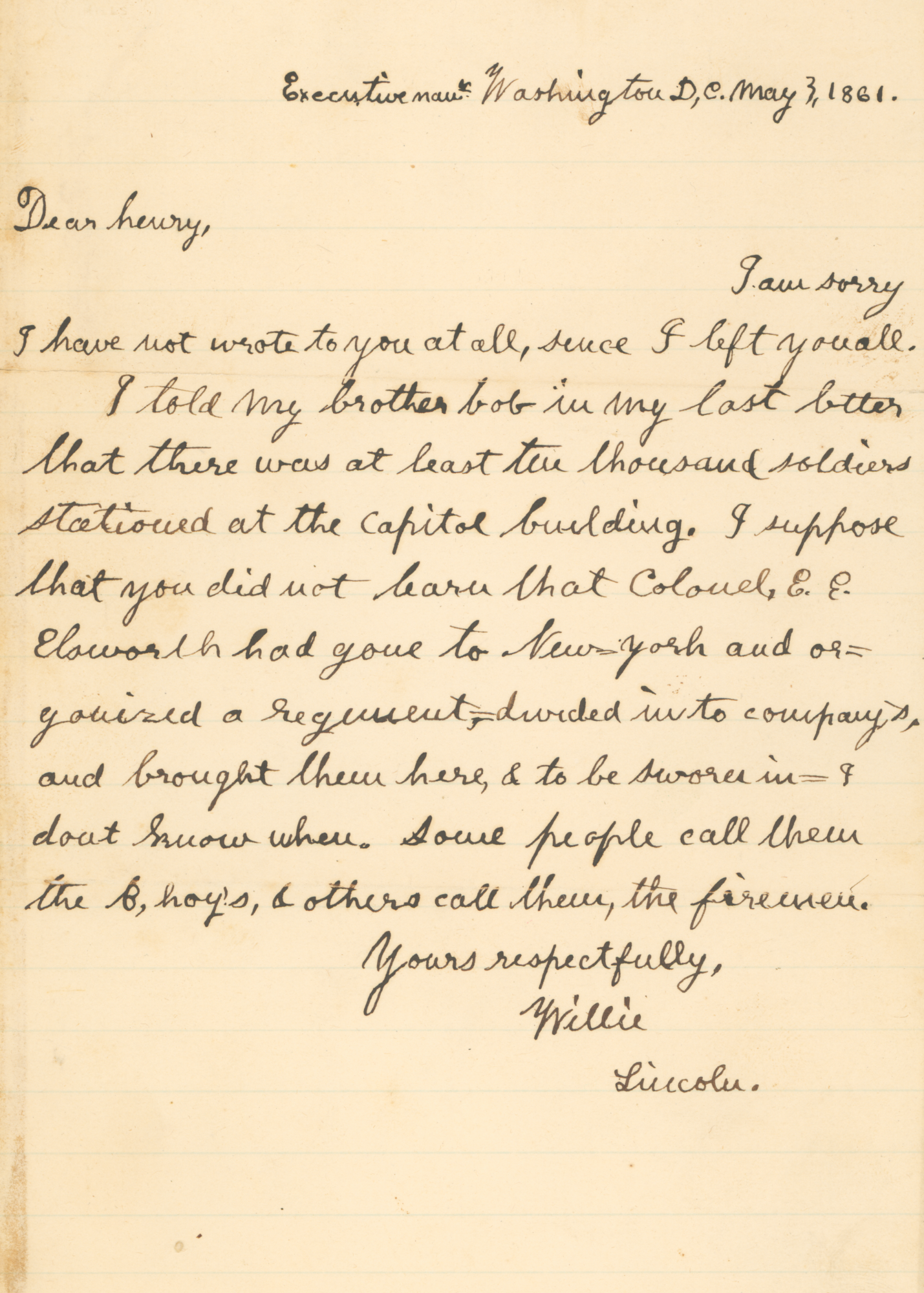
Executive mann Washington D,C. May 3, 1861.
Dear henry,
I am sorry I have not wrote to you at all, since I left you all.
I told my brother bob in my last letter that there was at least ten thousand soldiers stationed at the capitol building. I suppose that you did not learn that Colonel, E. E. Elsworth had gone to New-york and organized a regiment, divided into company’s, and brought them here, & to be sworn in. I dont know when. Some people call them the B,hoy’s, & others call them, the firemen.
Yours respectfully,
Willie Lincoln.
Willie Lincoln to Henry Remann, May 25, 1861
The Civil War dominated the rest of Willie Lincoln’s short life. After Elmer Ellsworth’s Fire Zouaves reached Washington, Willie and Tad, as well as their new playmates, Bud and Holly Taft, watched the soldiers drill behind the Capitol, visited the camps, and met heroes like Major Robert Anderson, the defender of Fort Sumter.
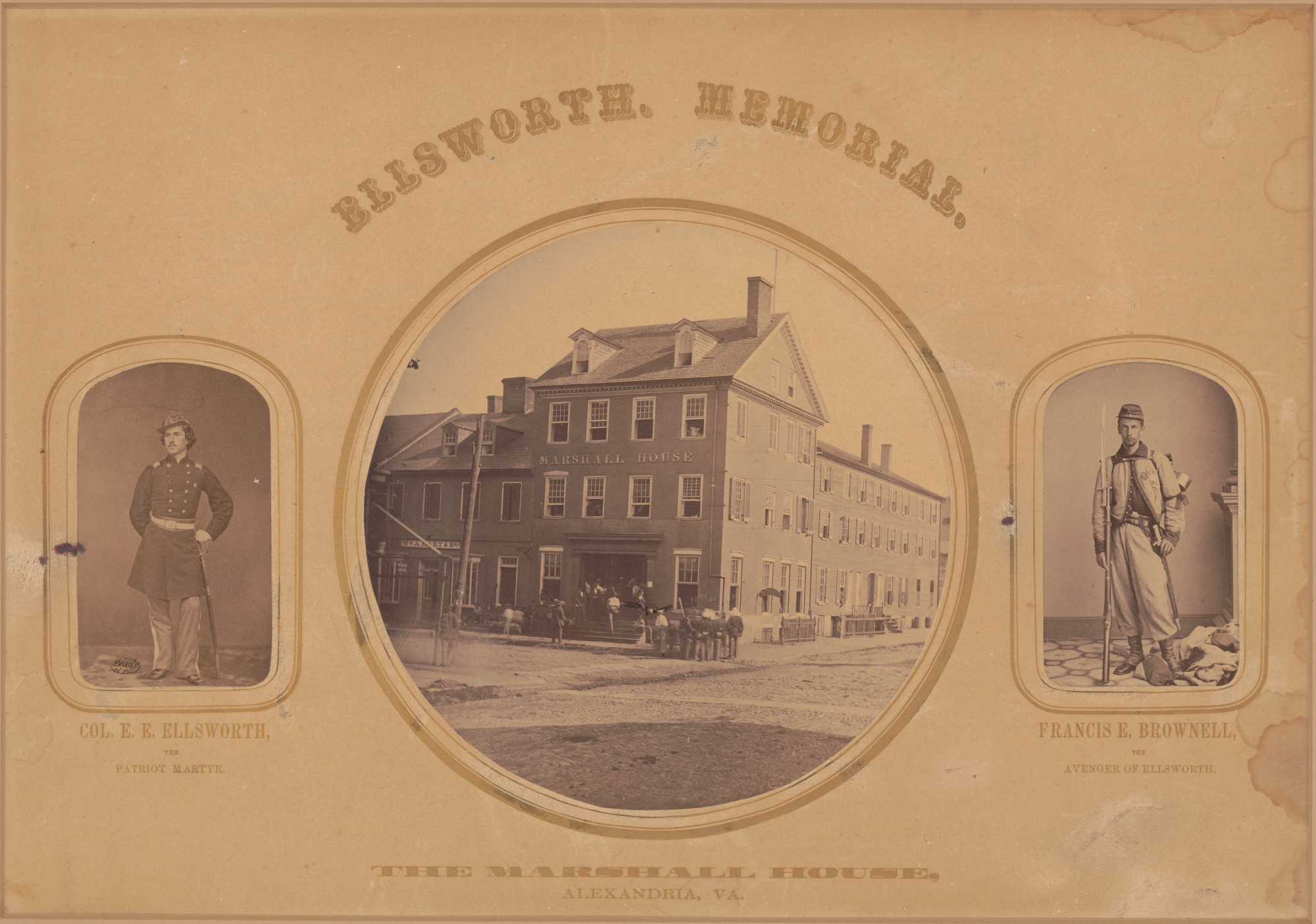
By May, events had turned sharply. Alexandria, Virginia, lay only eight miles from Washington and was a key port and rail center. Shortly after the Virginia Senate voted for secession on April 17, a massive Confederate flag began flying above the Marshall House hotel in Alexandria. According to Nicolay and Hay, Lincoln himself could see the flag through a spyglass from his window in the White House. After Virginia’s voters ratified secession on May 23, General Winfield Scott ordered Union forces across the Potomac to occupy the city. Ellsworth’s 11th New York Volunteers were chosen to participate in the operation.
At dawn on May 24, Ellsworth led his men into Alexandria. After confirming Confederate forces had abandoned the city, he ordered the destruction of railroad tracks and telegraph wires. Spotting the massive Confederate flag flying over the Marshall House, Ellsworth entered the hotel with a small force and cut it down. As he descended the stairs, James Jackson, the hotel owner and an ardent secessionist, leveled a double-barrel shotgun at Ellsworth and shot him at close range, killing him instantly. Private Francis Brownell immediately returned fire, killing Jackson.
When Lincoln heard Ellsworth had been killed, he wept openly. Ellsworth’s body lay in state in the East Room before his funeral on May 25. The Lincoln boys were not shielded from the reality of war. Julia Taft remembered seeing Tad and her brother at the funeral, perched on the back of General Scott’s chair. When the funeral concluded, the procession followed Ellsworth’s remains to the depot, where a train carried him back to New York for burial. The newspaper reported that Willie and Tad rode in the carriage, sitting beside their father and members of the Cabinet.
That same day, both father and son put Ellsworth’s death into words. Lincoln penned a condolence letter to Ellsworth’s parents, while ten-year-old Willie wrote to his friend Henry Remann in a steady hand, offering a factual, almost journalistic account that carefully recorded names and events, as if he was determined to report the tragedy, rather than reveal his own grief. It is the only surviving letter in which Willie used brackets, underscoring his determination to report the incident with precision.
Washington, D.C. May 25/61
Dear Henry
You request a letter, & here it is. I want you to give my respects to Edward McClernand, and tell him that I feel very sorry about his mother, and one more thing. Colonel E. E. Ellsworth went over to Alexandria, Va, and determined to take the secession flag down of the Marshall house. So he rushed up the steps untill he reached the pole, took down the flag, wrapped it around him [8 men with him], and coming down the steps [his comrade, Brownell, being in front of him] & Jackson [a secessionists] behind him, shot him immediately his [ellsworths] comrades] went & killed Jackson.
Yours truly
Willie Lincoln.
Willie Lincoln to Edward McCauley, August 21, 1861
Mary Lincoln loved to travel. In October 1859 she invited her former neighbor Hannah Shearer to join her in New York and the White Mountains, but the election changed those plans. The women reunited briefly in February 1861 when the Shearers boarded the inaugural train in Philadelphia and continued with the Lincolns to Harrisburg.
Once in Washington, Mary continued to travel as she made purchases to refurbish the dilapidated White House. When summer came, she planned a vacation for her boys and circle of companions. On July 11, 1861, she wrote Hannah Shearer, proposing a seaside holiday at Long Branch, New Jersey. Hotel owners there were eager to attract the First Lady and had been offering her free accommodations. Mary urged Hannah and her sons to join them. She painted a picture of sunbathing on the beach, an excursion to New York City, and a leisurely return to Washington, where Hannah would be free to spend as much time as she wanted. Ten days after Mary wrote this letter, Union troops suffered a humiliating defeat at the Battle of Bull Run. The reality of war postponed Mary’s plans, but did not cancel them.
On August 13, Mary left Washington with Willie and Tad, cousin Lizzie Grimsley, and several others. Hannah and her boys joined them in Philadelphia. The party traveled to New York, where Robert joined, and by August 16, they were settled in the Mansion House Hotel in Long Branch. Reporters tracked their outings and commented on Mary’s attire, while Robert and John Hay drew attention at dances and on crabbing excursions. Mary devoted much of her time to Hannah, who was pregnant and unwell, while Willie and Tad were thrilled to reunite with Hannah’s boys, especially Edward Rathbun, who had been Willie’s first correspondent.
Before leaving Long Branch, Willie wrote to another young friend, Edward McCauley, in Washington. Unlike his other surviving wartime letters, this one made no mention of the conflict consuming the nation. Instead, it captured the observations of a ten-year-old on vacation, removed from the realities of war, just as his mother likely intended.
S. LAIRD.
MANSION HOUSE,
Long Branch, N. J. August 21 1861
Dear Edward
I am exceedingly anxious to know, how you, and the rest of the boys are getting along. I have been quite well ever since, I left you. (Today being Wednesday), Mother thinks of leave on friday morning at 6, o,clock. Our expected destination is probably Newport R.I. The reason for this is, that our journey will last onley a few days now, it will be all the same as if we had not been any where but here. You cannot imagine, how nice it is to see the people bathing at the beach, near by.
From your friend & playmate
Willie Lincoln
Willie Lincoln to Henry Remann, September 30, 1861
Within six weeks of moving into the White House, the Civil War began. Aside from a brief seaside vacation that summer, Willie Lincoln spent the rest of his short life in Washington, surrounded by war. He saw soldiers daily, watched his father study maps with generals, visited hospitals, and even attended funerals. He understood the war was real.
The games he played reflected it. With his brother Tad and friends Bud and Holly Taft, Willie built a fort on the roof of the White House designed to repel a rebel invasion, dug a rifle pit in the Tafts’ backyard, and turned the Tafts’ attic into a prison for rebel soldiers. The boys acquired a doll dressed like a Zouave soldier and named him Jack. They accused him of falling asleep while on guard duty, held a mock trial, and “executed” him by gunfire, before burying him in the White House garden.
By early August 1861 the Lincoln and Taft boys were dressing like Civil War soldiers—wearing the colorful Zouave uniform of their martyred hero, Elmer Ellsworth. They camped in tents on the lawn between the Executive Mansion and the State Department. Julia Taft recalled that the boys formed a “soldier company” they called “Mrs. Lincoln’s Zouaves” and enlisted as many boys as they could. Willie served as colonel, Bud as major, Holly as captain, while Tad insisted on being the drummer boy. Perhaps it was this unit that Willie proudly described in this letter to his Springfield friend Henry Remann—written with all the sincerity and formality of a real Civil War soldier in the field.
Washington, D,C, September 30/1861
Executive Mansion
Dear Henry,
The last letter you sent to me, arrived in due time, which was on Saturday. My companions and I are raising a battalion. When, I came here, I waited until the beginning of June, and then joined a another boy in trying to get up a regiment. We failed however, and I then attempted to muster a Company. That soon broke up. Thereafter a boy stated he commanded a battalion, and my Company and I at once joined, believing that he spoke the truth, but we found out that such was not the case. Disappointed in every way we set to work and raised one, which is in a high state of efficiency and discipline.
I am
Dear Henry
yours sincerely
William W. Lincoln
William W. Lincoln to the Editor of the National Republican, October 30, 1861, published in National Republican (Washington, D.C.), November 4, 1861
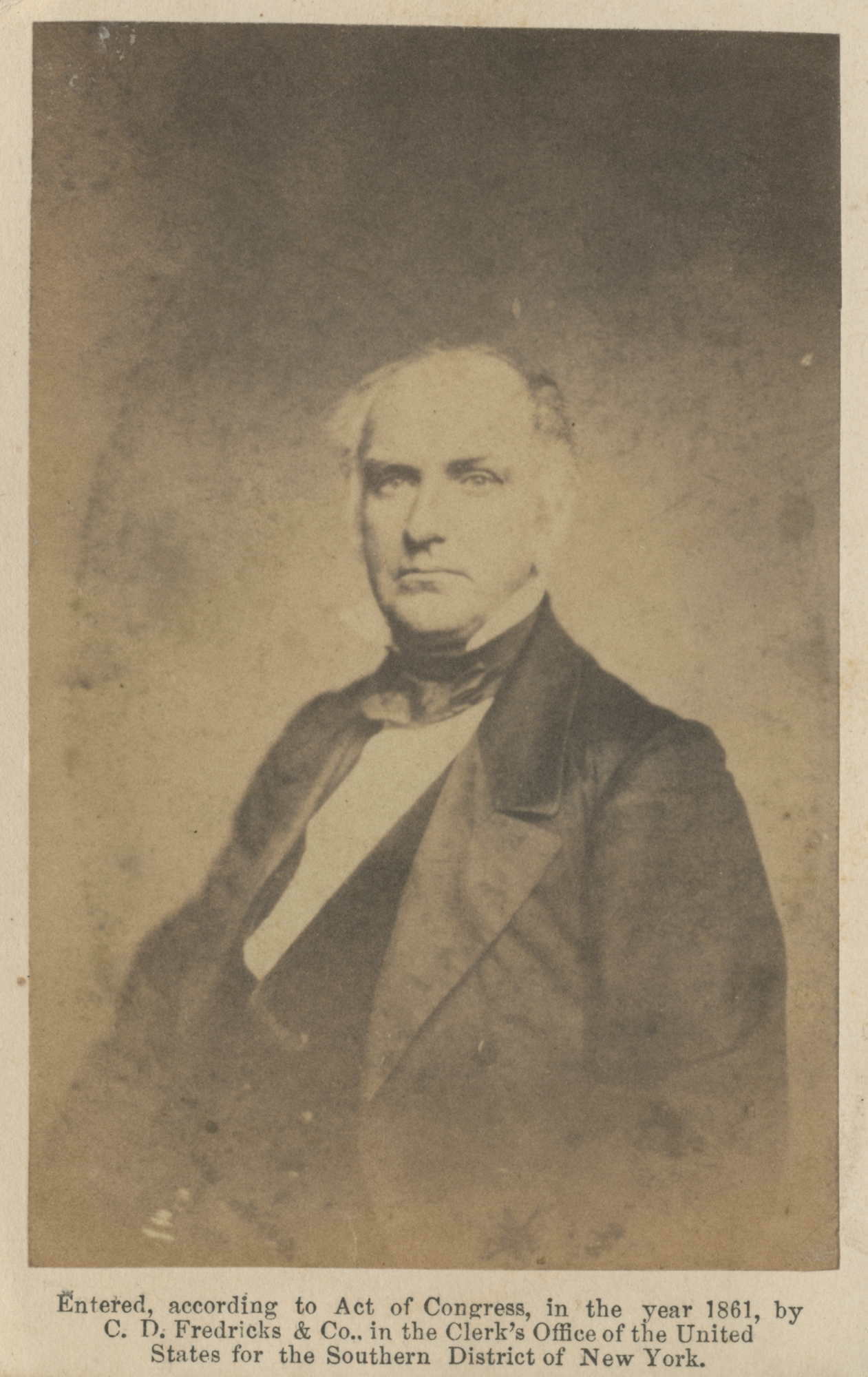
Edward Dickinson Baker held a special place in the Lincoln family—he was the namesake of their second son, Edward Baker Lincoln. Lincoln and Baker first met during the Black Hawk War, remained close political allies, and when Baker stepped aside to let Lincoln run for Congress in 1846, the Lincolns honored him by giving his name to their child.
Baker’s career took him from the Mexican War to California, and finally to a seat in the U.S. Senate from Oregon. On Lincoln’s inauguration day in 1861, he rode with Lincoln from the White House to the Capitol and introduced him to the crowd. When the war came, Baker raised and commanded the “California Regiment.”
On October 20, 1861, Baker visited the White House one last time. Lincoln sat against a tree on the lawn, while Baker reclined on the ground beside him. As they talked of old times, Willie Lincoln played in a pile of leaves. The next day, Baker led Union troops across the Potomac at Ball’s Bluff, Virginia, where he was killed in action, becoming the only U.S. senator ever to die in combat. Lincoln wept at the news, calling it “the bitterest blow of the war.”
Willie Lincoln was deeply aware of his father’s grief. Just ten years old, he was already recognized by his White House tutor, Alexander Williamson, as a quick and able student with a particular gift for language. In the days following Baker’s death, Willie composed a poem in his memory and carried it to the editor of the National Republican. According to later accounts, Willie had not told anyone he had written the poem and its publication came as a surprise.
However, if Willie had help composing the poem, it is possible help came from his father. Each of Willie’s four stanzas to Baker follows a familiar structure of four lines, with the second and fourth lines ending in rhyme—the same pattern his father had used in one of his own poems. Like his father’s most eloquent works during the Civil War, Willie used words to transform loss into meaning.
Washington, D.C., October 30, 1861.
Dear Sir: I enclose you my first attempt at poetry.
Yours truly, William W. Lincoln.
The Editor of the National Republican.
LINES
On the death of Colonel Edward Baker.
There was no patriot like Baker,
So noble and so true;
He fell as a soldier on the field,
His face to the sky of blue.
His voice is silent in the hall,
Which oft his presence grac’d,
No more he’ll hear the loud acclaim,
Which rang from place to place.
No squeamish notions filled his breast,
The Union was his theme,
“No surrender and no compromise,”
His day thought and night’s dream.
His country has her part to play,
To’rds those he has left behind,
His widow and his children all,—
She must always keep in mind.
A Note on Willie’s Correspondents
Edward Rathbun was the recipient of Willie Lincoln’s first surviving letter. After his family moved from Springfield to Pennsylvania, he and Willie saw each other only once more, during a seaside vacation at Long Branch, New Jersey. During that visit, Hannah was pregnant and not feeling well. When she returned from vacation, she gave birth to a son she named William Lincoln Shearer, who lived until 1932. Years later, he corresponded with Robert Todd Lincoln, whom he had never met, but knew about through his family’s long friendship with the Lincolns. They maintained a warm correspondence, exchanging several letters.
On November 20, 1864, Mary Lincoln wrote Hannah Shearer a condolence letter after learning that Hannah’s son Edward had died. Though more than two years had passed since Willie’s death, Mary confessed she was still overwhelmed by grief, closing her letter with the hope that “our Angel boys, are reunited for they loved each other, so much on Earth.”
Willie’s most frequent correspondent, however, was Henry Remann. Although the boys never saw each other again after the Lincolns left Springfield for Washington, they exchanged letters throughout the war. By carefully preserving Willie’s letters, Henry safeguarded his friend’s memory, just as his sister later helped preserve the Lincoln legacy. During the Civil War, Henry’s oldest sister Josephine married Albert Stevenson Edwards, son of Ninian and Elizabeth Edwards, linking the Remanns to the Lincolns through marriage. In 1897, Albert became caretaker of the Lincoln Home at Eighth and Jackson Streets. After his death in 1915, Josephine succeeded him, followed in turn by their daughter, Mary Edwards Brown, who held the post until 1924.
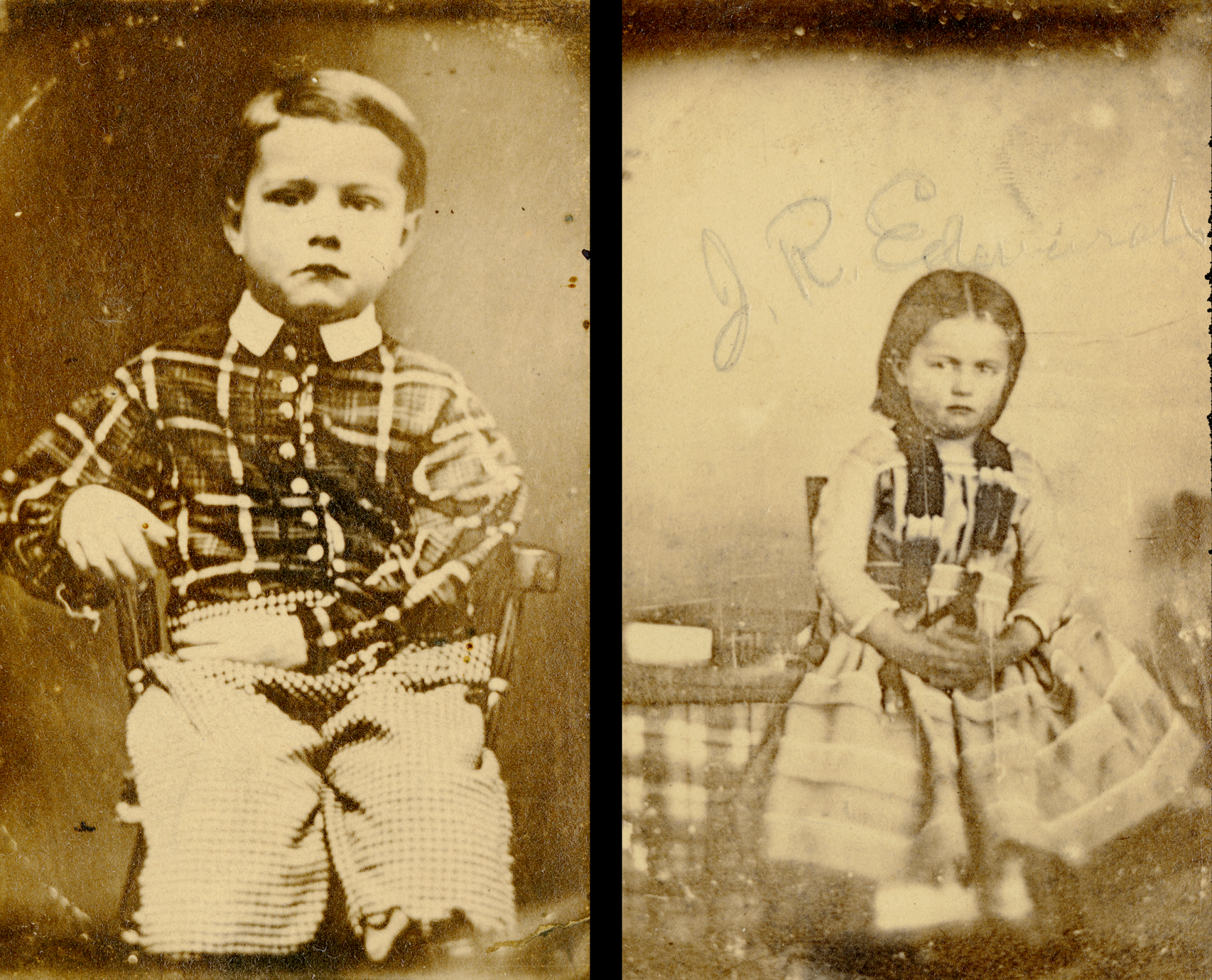
Meanwhile, Henry remained in his childhood home at the end of the block. He allowed his sister and niece to display Willie’s letters to him in the Lincoln Home and lived the rest of his life as one of Springfield’s leading citizens. In 1904, when Springfield opened its new Carnegie-funded Lincoln Public Library, Henry Remann was appointed its first librarian, a fitting role for the boy who safeguarded the writings of Abraham Lincoln’s son.
Samuel Wheeler is a historian specializing in the history of Illinois, the Civil War Era, and the life and legacy of Abraham Lincoln. He earned his Ph.D. in history from Southern Illinois University Carbondale. For more than two decades, Wheeler has worked in the field of public history, most recently serving as the State Historian of Illinois and Director of Research and Collections at the Abraham Lincoln Presidential Library and Museum in Springfield. He currently serves as the Director of History Programs at the Illinois Supreme Court Historic Preservation Commission.