From the Collection: Selling Lincoln
From the Collection
SELLING LINCOLN
by Jessie Cortesi
Senior Lincoln Librarian, Allen County Public Library
With his undeniable, unmistakable name recognition, Abraham Lincoln has in death become a national—if not worldwide—canvas for selling just about anything. His rags to riches story, exceptional character, and leadership of our nation through its most trying time have propelled him to everlasting fame. Indeed, he left an indelible mark on American public memory that has endured for 160 years, regardless of how interpretation of that memory may twist and turn with time and political allegiance.
One might say that only George Washington stands above Lincoln as our national hero. Yet, it is Lincoln and his legacy that is time and again most pervasively appropriated for ideological or financial motivations. Whether his star power is used to promote certain values or character traits or to sell commercial goods, any and all can find something in Lincoln to further their aims.
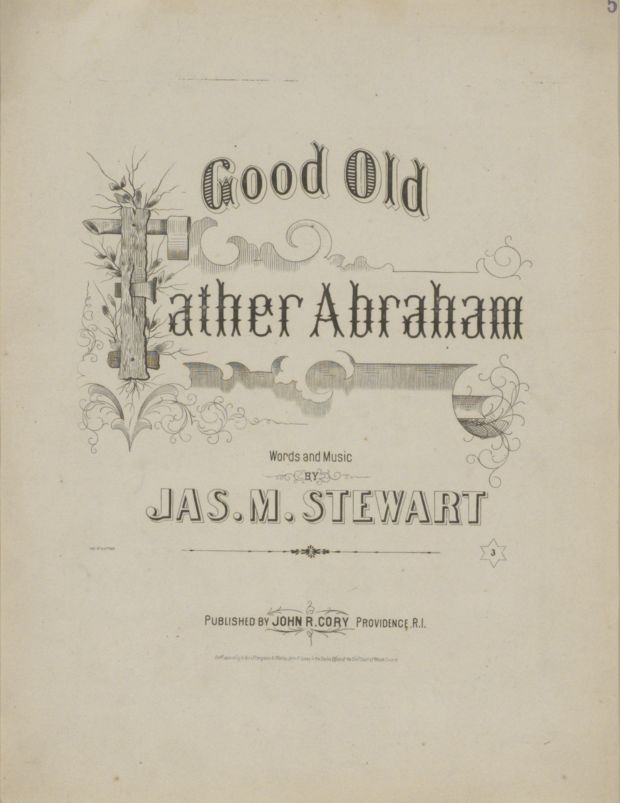
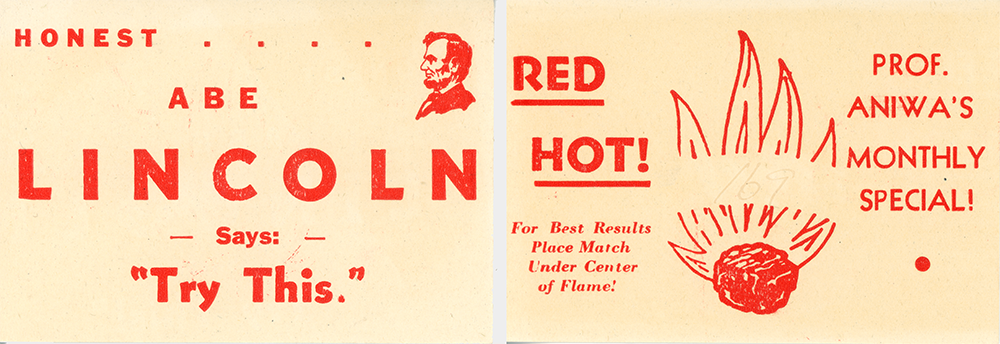
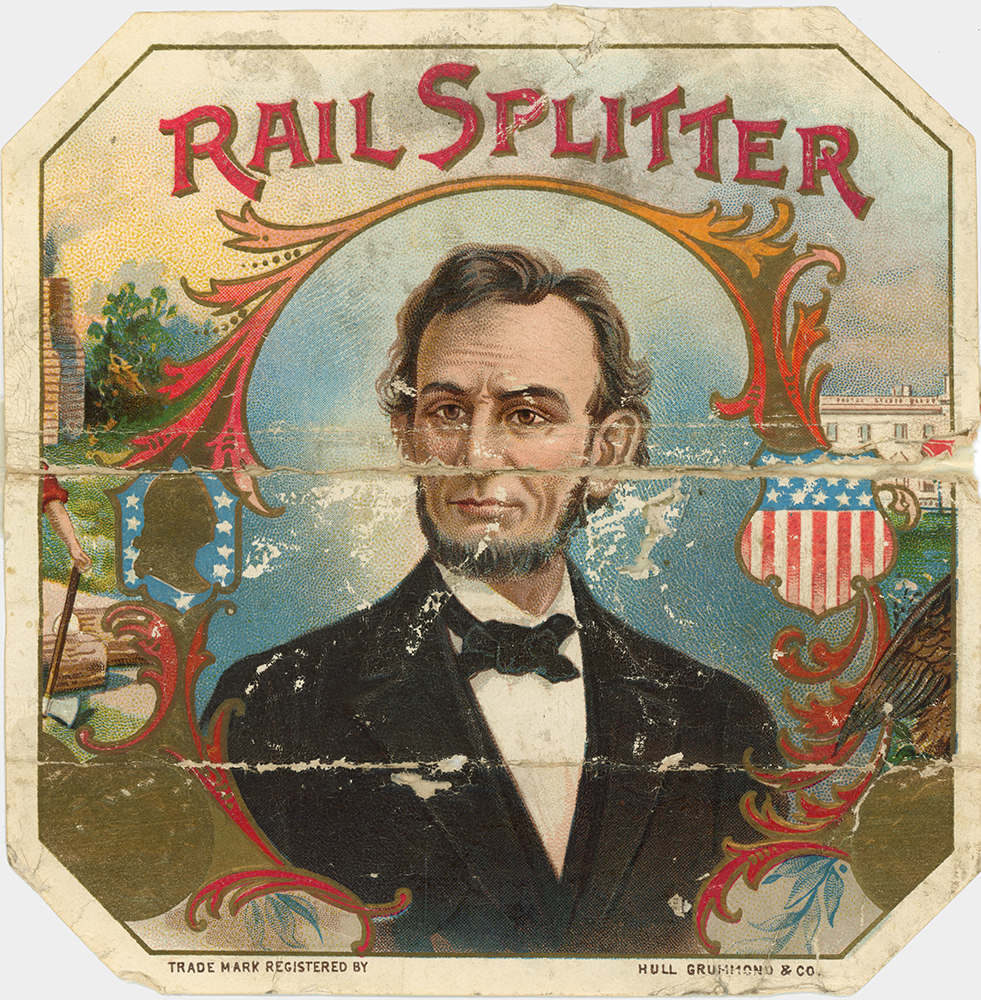
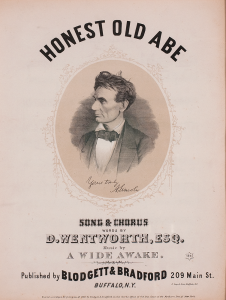
Political allies and supporters distinctly branded him during his lifetime in order to sell him to constituents, party leaders, and ultimately the American public at large. Lincoln’s allies needed a clear brand and attractive, concise packaging to succinctly convey his appeal as a candidate and trusted leader, most memorably under the “Honest Abe” moniker. Like the public, promoters knew next to nothing about Lincoln when he became the Republican presidential nominee in 1860. They seized on sparse scraps of his background that neatly illustrated the party’s emphasis on Lincoln’s inspiring rise from log cabin origins, exemplified by the “Rail Splitter” nickname. During and following the war, he earned even more sobriquets: “Father Abraham,” “The Great Emancipator,” and “The Martyr President” or “Martyred Father.”
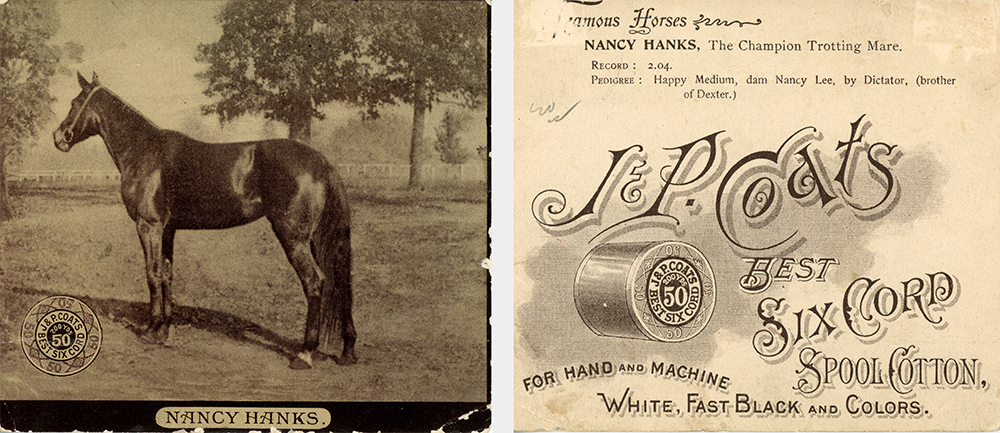
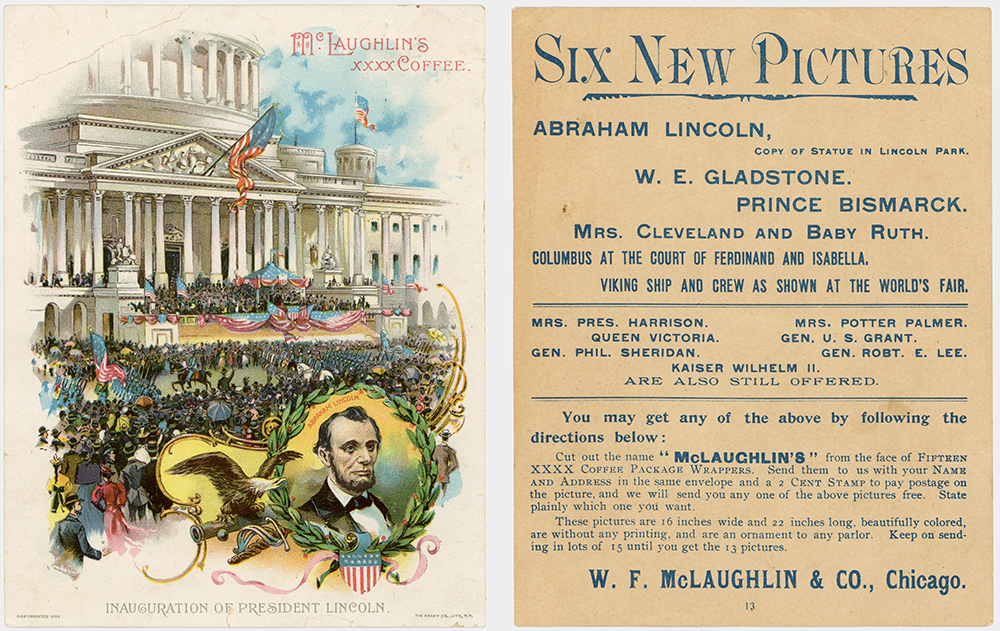
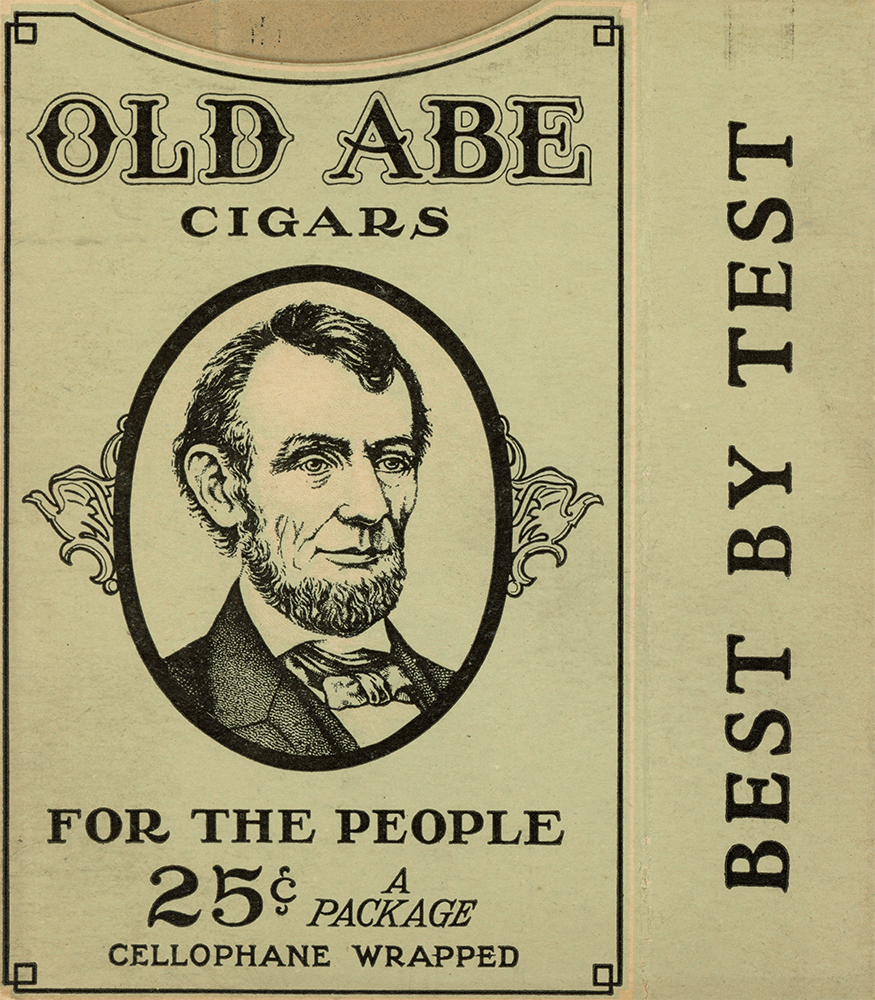
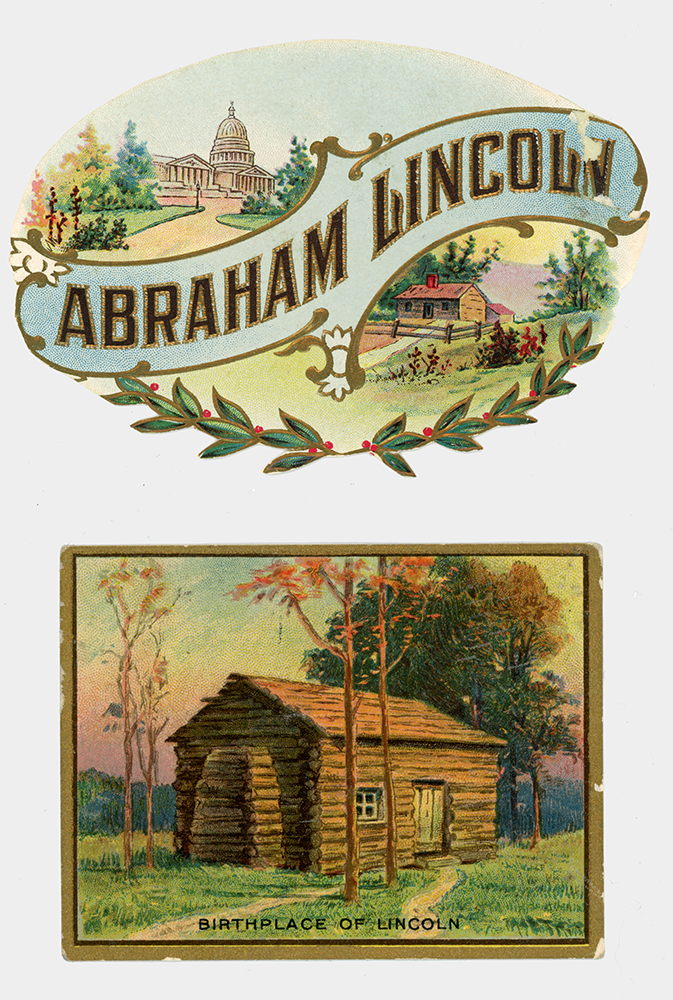
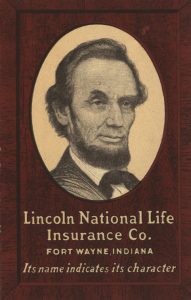
Lincoln was a poor salesman in life with his New Salem store, but was and is great promotional material for abundant reasons—his character, his humble beginnings and rise to be the most powerful individual in the nation, and especially his supreme recognition factor. The likeness and reputation of President Lincoln has been applied to sell just about anything in the 160 years since his death—charcoal, coffee, coats, insurance, engravings, cigars, you name it.
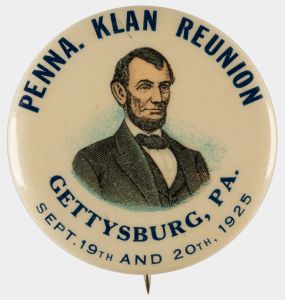
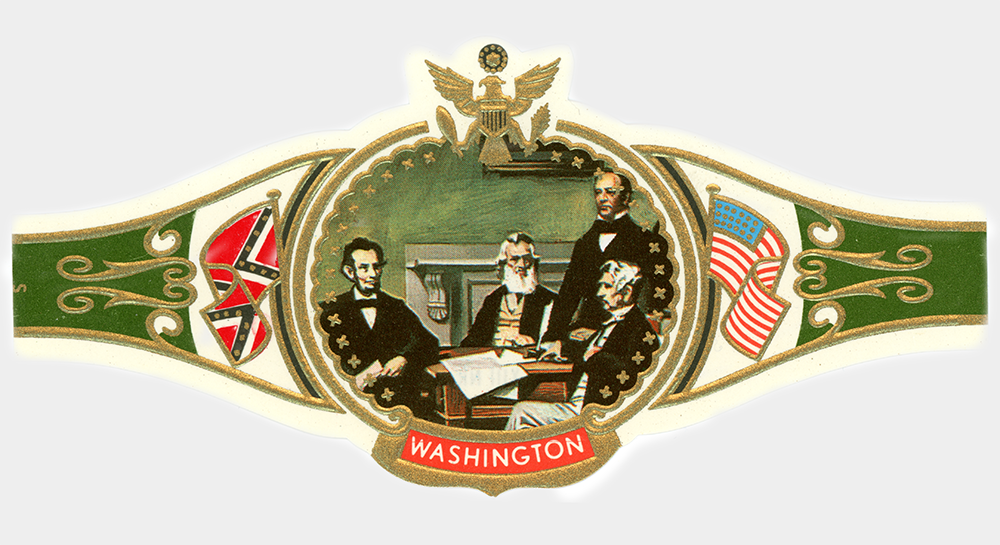
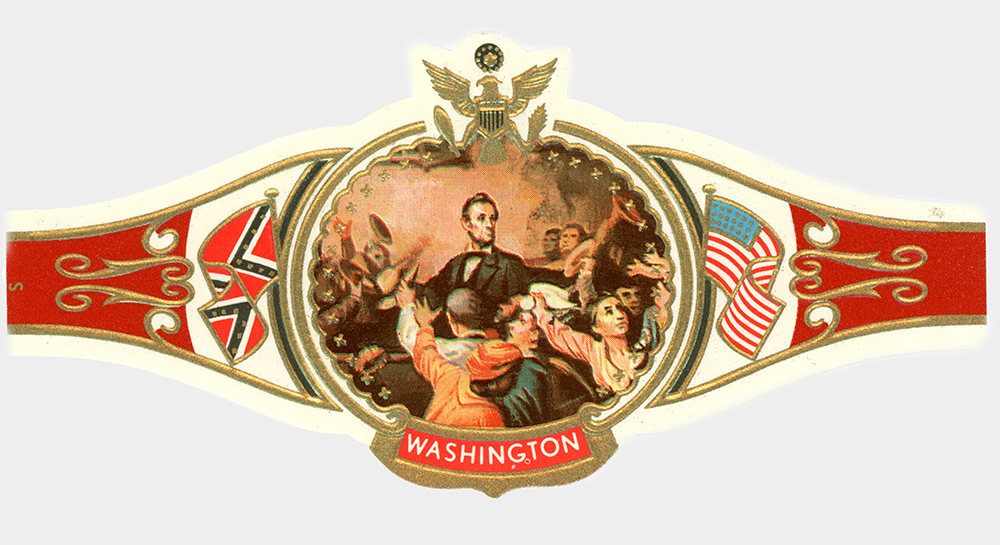
He’s used by folks of all political persuasions and by interests that Lincoln may well have taken issue with—including the Ku Klux Klan. The most unusual Lincoln commemorative pin we have in our collection commemorates the 1925 annual meeting of the Pennsylvania Ku Klux Klan on the battlefield at Gettysburg. Some imagery even positions Lincoln centered between the U.S. and Confederate flags.
Today, we continue to see advertisements using Abraham Lincoln to promote products, such as the Lincoln Motor Company and the insurance company Lincoln Financial. Notably, the advertising landscape has evolved in the extreme over the last century and half and has undoubtedly grown more insidious. Jaron Lanier, a computer scientist and philosopher, has said that “What might once have been called advertising must now be understood as continuous behavior modification on a titanic scale,” as regards the main locus point of advertising today: social media. And in this new landscape of behavior modification dressed up as advertising, Lincoln continues on as something of a tabula rasa for any and all to paint their messaging on.
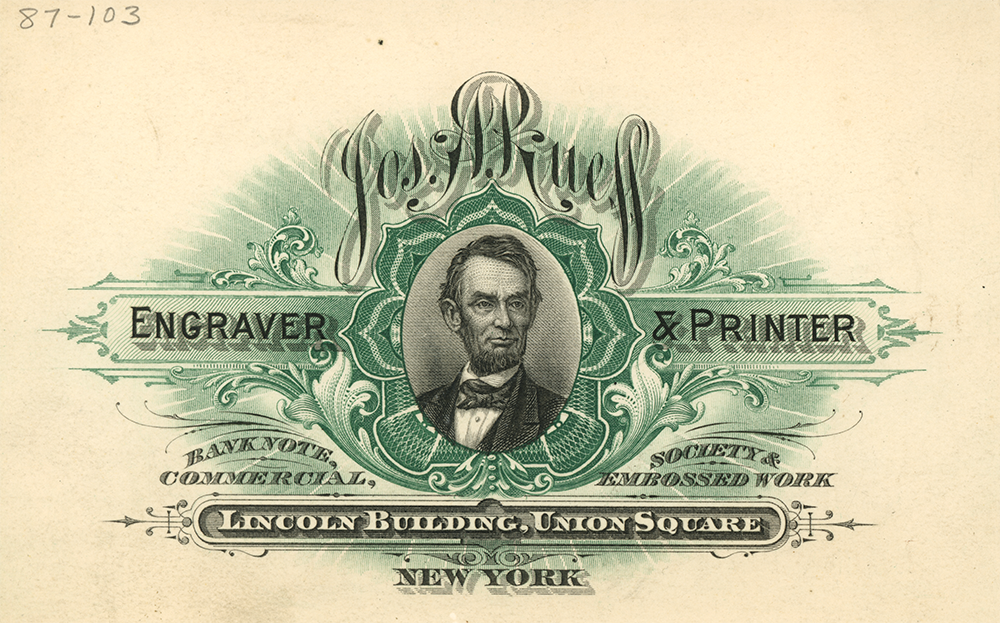
From an icon of freedom and justice to an icon of commercialism and proselytization, his image and legacy will be employed to sell products and ideas well on into the future.