

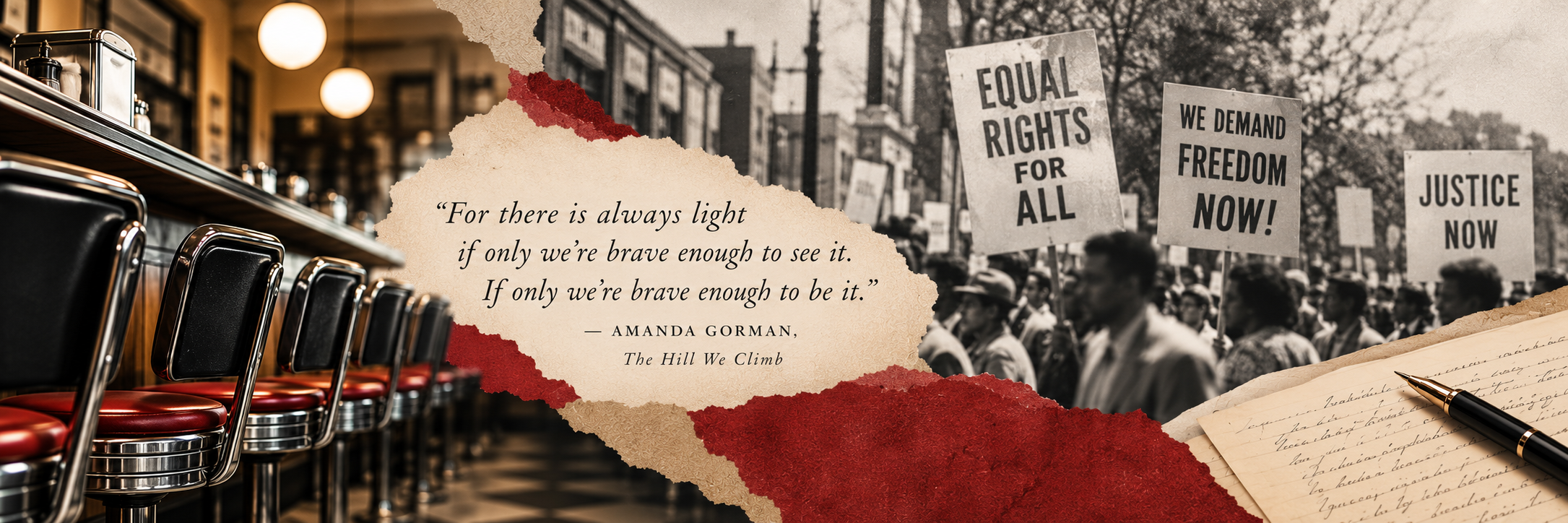
Lincoln Legacy Unit 2: The Greensboro Four
Lesson Plans
Unit 2 Day 1: The Greensboro Four & Youth Activism
Students explore the Greensboro Four sit-ins, analyzing themes of courage, youth activism, and social change using historical evidence.
Unit 2 Day 2: Youth Activism in the Civil Rights Movement
Students explore youth activism during the Civil Rights Movement, examining student protests, courage, resistance, and social change.
Unit 2 Day 3: The Power of Nonviolence
Students explore nonviolence in the Civil Rights Movement through Martin Luther King Jr.'s writings and the Greensboro sit-ins.

Unit 2 Day 4: Poetry as Activism
Students explore poetry as activism by analyzing how Walt Whitman and Langston Hughes address identity, equality, and injustice.
Unit 2 Day 5: Practicing TWIST with Civil Rights Poetry
Students explore Civil Rights-era poetry using TWIST to analyze identity, cultural pride, theme, and social change.
Unit 2 Day 6: Civil Rights Poetry Jigsaw
Students analyze Civil Rights-era poetry using the TWIST method, collaborating in expert groups to explore theme, imagery, and meaning.
Unit 2 Day 6 Alternate: Civil Rights Poetry Jigsaw (One Day Option)
Students analyze Civil Rights-era poetry using the TWIST method to explore tone, imagery, theme, and messages of justice.
Unit 2 Day 7: Presentation Preparation
Students collaborate to prepare poetry presentations, exploring theme, tone, imagery, and the role of poetry in the Civil Rights Movement.
Unit 2 Day 8: Poetry Jigsaw Presentations
Students present and discuss Civil Rights-era poetry, exploring imagery, tone, theme, and how poets use language to inspire change.
Unit 2 Day 9: Analyzing Early Protest Texts
Students analyze civil rights protest texts to identify central ideas, examine historical messages, and explore how language inspires change.
Unit 2 Day 10: Building the Message
Students analyze civil rights texts to explore tone, audience, rhetorical strategies, and how persuasive language inspires change.
Unit 2 Day 11: Evaluating Rhetoric & Tone
Students compare civil rights protest texts, analyzing tone, rhetorical strategies, and how language inspires change.
Unit 2 Day 12: Protest Strategy Toolkit
Students craft persuasive protest messages inspired by the Civil Rights Movement, using rhetorical strategies to inspire change.
Unit 2 Day 13: Write to Inspire
Students craft persuasive protest messages inspired by the Civil Rights Movement, using rhetorical strategies to inspire change.
Unit 2 Day 14: Revising for Impact
Students revise persuasive writing about civil rights using peer feedback to strengthen clarity, tone, and rhetorical impact.
Unit 2 Day 15: Using Twist to Analyze Modern Poetry
Analyze modern poetry using the TWIST method to explore tone, imagery, word choice, and theme through a Civil Rights lens.
Unit 2 Day 16: Introduction to Poetry Writing
Introduce poetry writing with a grades 9–10 lesson exploring social commentary, self-expression, and meaningful social issues.
Unit 2 Day 17: Drafting Poems
A poetry writing lesson plan for grades 9–10 exploring social issues through imagery, tone, diction, and creative expression.
Unit 2 Day 18: Revising for Impact
Use peer feedback to revise original poetry, strengthen poetic devices, and prepare for a classroom poetry coffeehouse.
Unit 2 Day 19: Voices for Change Coffeehouse Celebration
Celebrate student voices with a poetry coffeehouse lesson plan for grades 9–10 featuring original poems, readings, and reflection.
Talk to us
Have feedback about this resource or need custom materials? We’d love to hear from you.
Unit 2 Day 1: The Greensboro Four & Youth Activism
Students explore the Greensboro Four sit-ins, analyzing themes of courage, youth activism, and social change using historical evidence.
Unit 2 Day 2: Youth Activism in the Civil Rights Movement
Students explore youth activism during the Civil Rights Movement, examining student protests, courage, resistance, and social change.
Unit 2 Day 3: The Power of Nonviolence
Students explore nonviolence in the Civil Rights Movement through Martin Luther King Jr.'s writings and the Greensboro sit-ins.